
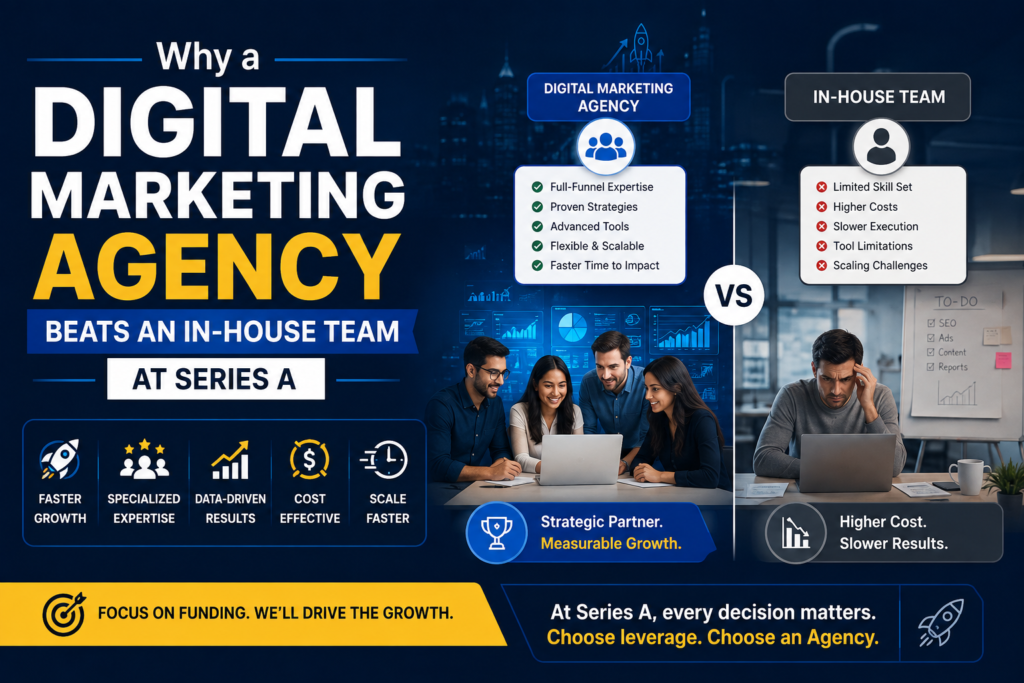
Your Series A round buys you eighteen months of runway, not eighteen months of trial and error on marketing hires, which is exactly why a digital marketing agency wins this stage.
The Math Doesn’t Favor In-House Yet
A single senior growth marketer costs $140,000 to $180,000 a year in most US markets, and that number covers one skill set, not the five you actually need: paid acquisition, SEO, content, lifecycle email, and analytics. A digital marketing agency bundles those five functions into one retainer, often for less than the fully-loaded cost of two in-house hires. Founders who try to build a complete team in-house at Series A end up with generalists stretched across channels they’ve never mastered, or specialists sitting idle between campaigns because the company doesn’t yet generate enough volume to keep them busy. A digital marketing agency solves this by pooling talent across clients, so you get a paid-search specialist for ten hours a week instead of paying a full salary for a skill you use in bursts.
There’s also the hiring cost most founders underprice: recruiting a strong marketing lead takes eight to twelve weeks, and a bad hire costs another three months to detect and unwind. A digital marketing agency starts running campaigns within one to two weeks of signing, because the team, tooling, and processes already exist. At Series A, speed to first data point matters more than ownership of the function, and an agency compresses that timeline dramatically.
Agencies Have Already Made the Mistakes You’re About to Make
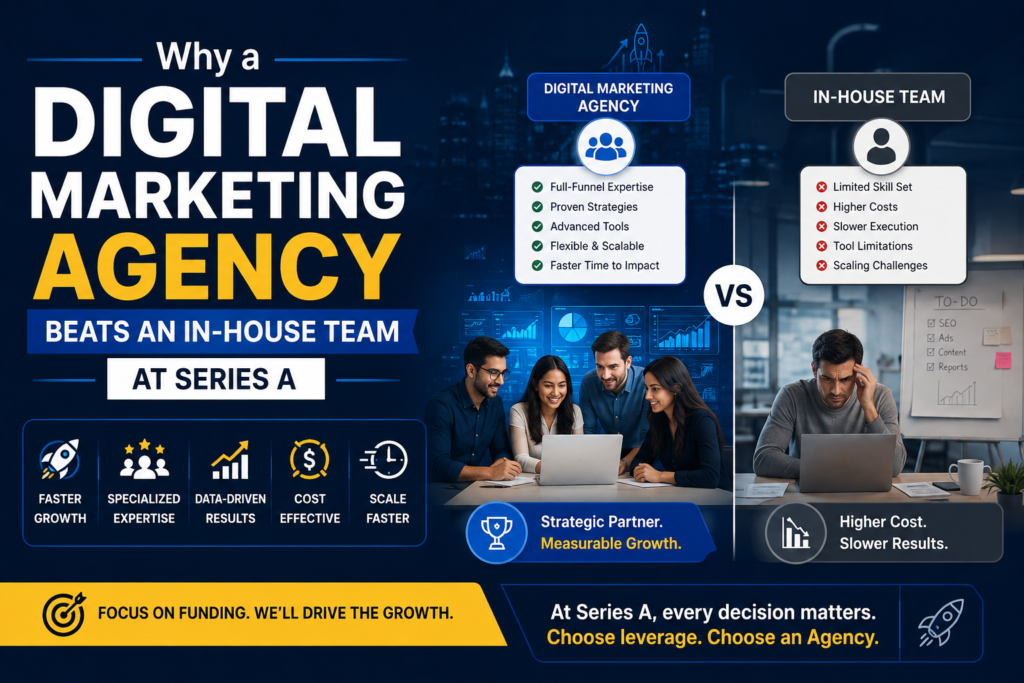
Every early-stage marketing hire learns which ad creative converts, which landing page kills conversion, and which channel wastes budget — by burning your money to find out. A digital marketing agency has run hundreds of similar campaigns across comparable company stages and buyer types, so it walks in with pattern recognition your first hire won’t have for a year. This shows up concretely: an agency can tell you within the first month that your CAC on paid social is structurally too high for a B2B SaaS product with a six-month sales cycle, because it has seen that exact mismatch dozens of times before. An in-house hire discovers the same thing after three months of spend.
This experience compounds across channels. A digital marketing agency working across multiple clients spots shifts in platform algorithms, rising CPMs, or emerging channels faster than a single in-house marketer who only watches their own dashboards. When iOS privacy changes gutted Facebook attribution, agencies serving dozens of accounts adjusted their measurement approach within weeks; companies relying on one in-house marketer often took months to notice their numbers had gone stale.
Founders Stay Focused on the Product, Not the Funnel
Technical founders raise Series A to build product and close enterprise deals, not to learn the difference between a lookalike audience and a retargeting pool. Every hour a founder spends reviewing ad copy or debating attribution models is an hour not spent on the roadmap or the next round of customer interviews. A digital marketing agency takes that operational load off the founder’s desk entirely, delivering a weekly dashboard and a monthly strategy call instead of daily decisions that pull the founder out of deep work.
This matters more than it sounds. Founders who try to manage marketing personally, or manage a junior in-house hire closely because they don’t trust the function yet, end up doing two jobs badly instead of one job well. A digital marketing agency comes with its own quality control, senior oversight, and reporting cadence, which means the founder reviews outcomes instead of managing inputs. That shift alone often recovers ten to fifteen hours a week for the founder, hours that translate directly into product velocity or sales pipeline.
Scaling Down Is as Important as Scaling Up
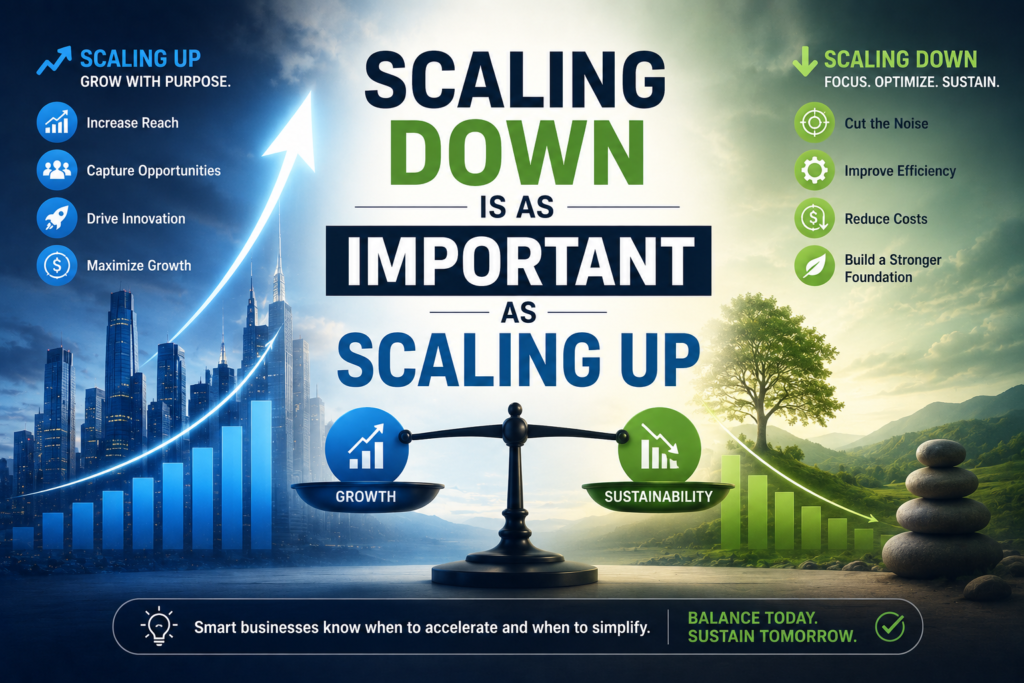
Series A companies pivot. A channel that works in month three can stop working in month nine because the ideal customer profile shifted, the sales motion changed, or a competitor entered the space. A digital marketing agency lets you reallocate budget across channels or scale spend up and down within a single billing cycle, because the retainer structure is built for that flexibility. An in-house team can’t be resized that quickly — laying off a marketing hire because a channel got cut is expensive, slow, and damaging to the culture you’re trying to build.
This flexibility also applies to expertise. If your growth strategy shifts from paid acquisition to SEO and content because your CAC is climbing, a digital marketing agency reallocates specialists internally without you running a new search. A company relying on one in-house generalist has to either retrain that person from scratch or start a new hiring cycle, both of which cost months you don’t have between funding rounds. The agency model absorbs strategic pivots that would otherwise require a headcount change.
Series A is a narrow window, and every month spent building a marketing function from scratch is a month a digital marketing agency could have spent generating pipeline. Hire the agency first, build the in-house team once the channels are proven and the budget justifies full-time ownership.
Written By sumitmarketing.com