
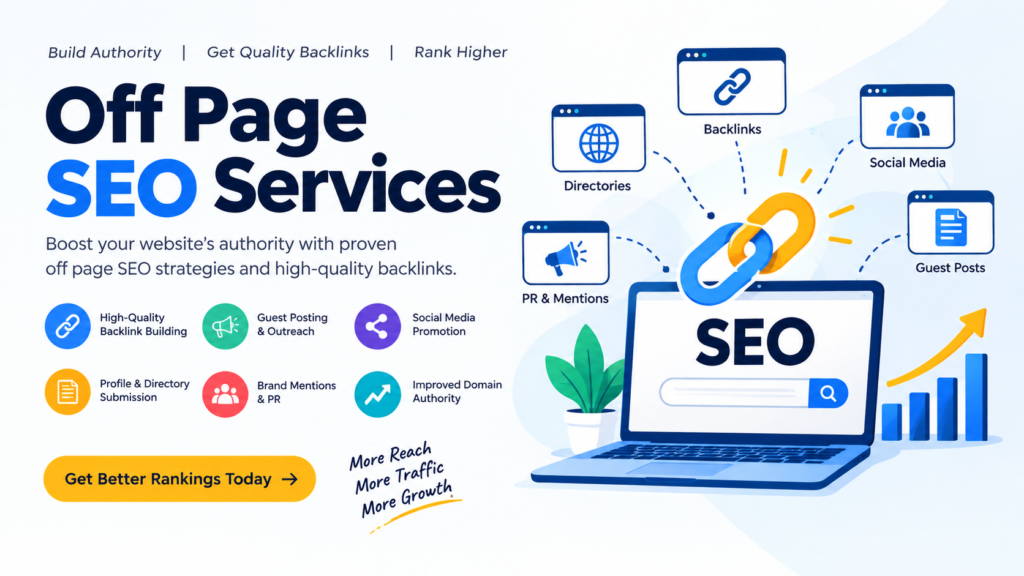
Your engineering team ships in two-week sprints, but your backlink profile hasn’t moved in six months, and that gap is why a competitor with a worse product outranks you.
The Math Founders Miss: CAC vs. Compounding Authority
Series A founders track CAC obsessively for paid channels, then treat organic authority as a someday project. That’s backward. Paid acquisition resets to zero the moment you stop spending — turn off the budget and the pipeline dries up within weeks. Off page SEO services build domain authority that compounds instead of resetting: a link earned in month three still passes equity in month eighteen, and it keeps passing it whether or not anyone touches the campaign again. Run the numbers on your own funnel. If your blended CAC through paid channels sits above $150, and a focused backlink campaign costs a few thousand dollars but keeps sending qualified traffic for years, the payback period beats almost every paid channel you’re currently funding. This isn’t a claim that off page SEO services replace paid acquisition — performance channels still matter for predictable, dial-up-able volume. It’s a claim that ignoring off page SEO services leaves a compounding asset unbuilt while competitors quietly stack theirs, quarter after quarter, until the gap is too wide to close cheaply. The founders who win the category three years out are rarely the ones who spent the most on ads that quarter. They’re the ones who invested in off page SEO services before they needed the traffic, so the traffic already existed when the sales team needed pipeline for the next raise.
What Actually Moves Rankings: Signals, Not Volume
Google’s own guidance and independent ranking studies consistently point to link quality and relevance over raw quantity. A single link from a publication your buyers already read outweighs fifty links from directories no one visits. This is where founders get burned by cheap vendors selling volume: a thousand low-quality links can trigger a manual action and set your domain back further than doing nothing. Legitimate off page SEO services focus on a narrower set of signals — earned coverage from industry publications, guest contributions on sites your ICP frequents, digital PR tied to product launches or funding announcements, and strategic partnerships that generate natural mentions. Technical founders already understand this instinct from infrastructure work: you don’t scale a system by adding more of the same low-quality component, you scale it by upgrading the weakest link in the chain. Off page SEO services applied correctly do the same thing to your domain’s authority graph — they upgrade the quality of what’s pointing at you, not just the count.
Speed: What a Real Engagement Timeline Looks Like
Founders ask the obvious question first: how fast does this move the needle. Off page SEO services don’t produce day-one results the way a paid campaign does, and any vendor promising that is misrepresenting how search engines index and trust new signals. A realistic engagement structure looks like this: the first 30 days go to auditing your current backlink profile, identifying toxic links dragging you down, and mapping target publications and partners relevant to your category. Days 30 to 90 go to outreach and content placement — this is where digital PR, guest posts, and partnership links start landing. By month four, you typically see the first measurable shifts in domain authority and referring domain count, and by month six, ranking movement on competitive terms becomes visible in your tracked keyword set. That’s a six-month runway, not a six-week one. If your board expects organic traffic to double before your next fundraise and you’re starting from zero, off page SEO services need to start now, not after the Series B deck is due. The founders who get burned aren’t the ones who invest in off page SEO services — they’re the ones who start the clock too late and then panic-buy volume from a vendor promising shortcuts that don’t exist.
Build In-House or Buy: The Actual Decision Framework
This is the question every technical founder eventually asks, and it deserves a real answer instead of a sales pitch. Building an in-house off page SEO function means hiring a specialist who understands digital PR, outreach, and link-quality evaluation — a role that’s hard to source well below the senior level, and a junior hire in this function often does more harm than good by chasing quantity over quality. Buying off page SEO services from an agency or specialist means paying for existing relationships with journalists, publications, and platforms that would take an in-house hire a year or more to build from scratch. The decision usually comes down to your stage and your timeline. Pre-Series-A, with a lean team and no dedicated marketing hire, buying off page SEO services from a specialist is almost always more capital-efficient than hiring for a function you can’t yet manage well. Post-Series-A, with a marketing leader in place who can evaluate vendor quality and set strategy, a hybrid model works — an in-house lead who directs an external off page SEO services partner for execution and relationship access. What doesn’t work at any stage is treating this as a one-time project. Off page SEO services function more like an ongoing infrastructure investment than a campaign with a defined end date, because your competitors are building their authority graphs continuously, and a domain that stops earning links starts losing relative ground even if it does nothing wrong.
The Trap of Treating This as a Checkbox
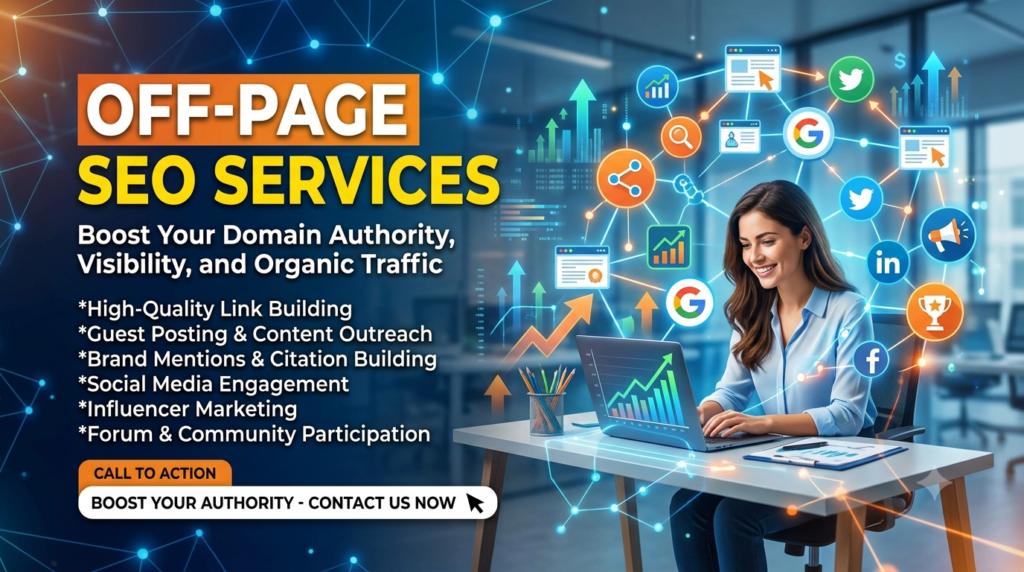
The single most expensive mistake founders make with off page SEO services is delegating them to whoever’s cheapest and moving on. Cheap vendors sell link volume because volume is easy to fake and easy to invoice, and a spreadsheet full of “links delivered” looks like progress to a founder who isn’t checking domain relevance. Quality off page SEO services require judgment calls about relevance, publication authority, and long-term brand fit — judgment that a $500-a-month retainer can’t buy, because that price point only covers volume, not research. If a vendor can’t explain why a specific publication matters to your specific ICP, they’re selling links, not strategy, and you should ask that question in the first sales call before signing anything. The founders who treat off page SEO services as a real function, with the same rigor they apply to engineering hires or infrastructure vendors, are the ones whose domain authority actually reflects their product quality a year from now. The rest end up with a link profile that looks busy and does nothing, which is worse than doing nothing at all, because it costs money every month while producing no defensible asset and no ranking movement to show for it.
Off page SEO services aren’t a marketing nice-to-have — they’re compounding infrastructure that your competitors are already building while you decide whether to start. The only real risk isn’t spending on it; it’s spending on it too late, or too cheaply, to matter.
Written By sumitmarketing.com