
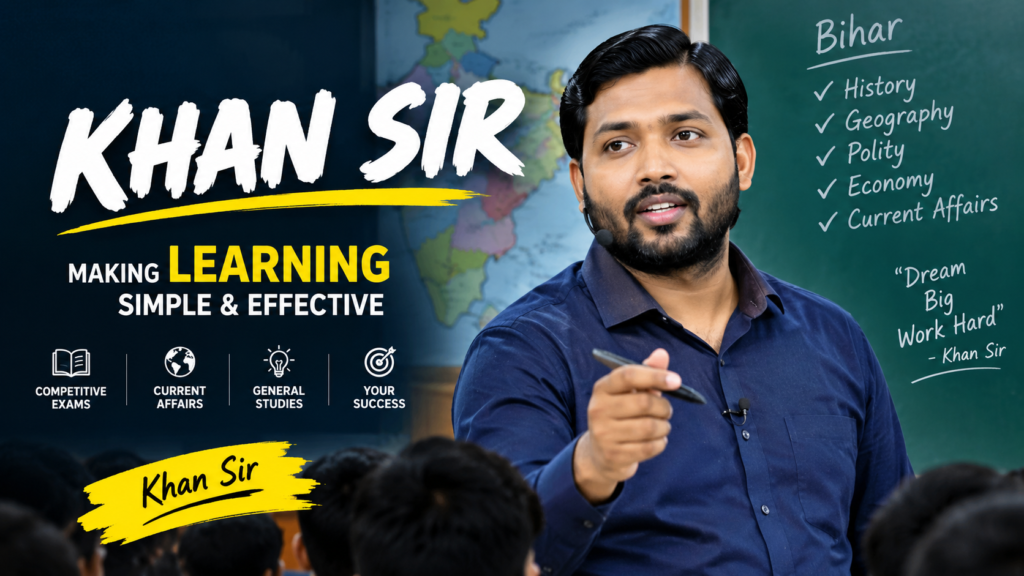
Khan Sir did not launch with a funded roadmap. He started teaching in Patna, charged Rs 200, and kept taking students who struggled to pay even that. One profile says he began with six students in a small centre. The formal Khan GS Research Centre followed in 2010. How Patna’s Khan Sir Made Learning Affordable for Millions Across India +2
Six students work as a design-partner cohort. A live classroom hands a teacher feedback without an analytics stack: a confused face, a repeated question, a seat that stays empty next week. That format compresses the cycle between hypothesis and correction to a single session. Series A teams often chase the same loop through quarterly reviews and heavy instrumentation.
Apply the same logic to your next bet. Strip the feature, vertical, or pricing tier down to the smallest paid version you can deliver in 30 days, then charge for it. A real price separates curiosity from need faster than any survey. Set a hard rule before you start: if five buyers will not pay for the small version, the full build will not close them either.
The Rs 200 fee behind Khan Sir’s first classes shows the principle at its plainest. A low, real price produces paying users, and paying users produce evidence. Founders at your stage often defend a six-month build with a slide about market size. Khan Sir’s path runs the opposite order: teach first, formalize second.
Speed also comes from removing steps. Khan Sir’s early model needed a teacher and a blackboard, nothing else. Audit your own first-90-day plan and delete every dependency a paying customer does not touch: the custom dashboard, the SSO integration, the polished onboarding flow. Ship the manual version, then automate the steps customers actually repeat. The Better India
Khan Sir Treated Distribution as the Product
Khan Sir launched his YouTube channel in April 2019 and, according to one profile, reached one million subscribers within a month. By February 2026, the main channel passed 24.9 million subscribers, and a second channel added 5.35 million more. Paid classes sit behind that audience: the centres operate in Patna, Delhi, Prayagraj, and Dehradun, and annual fees run from Rs 20,000 to Rs 1,00,000 depending on the course. Khan Sir Patna (Faisal Khan): Bio, Wiki, Career, Net Worth, Etc. +3
The mechanics matter more than the numbers. A free video costs the same to produce whether 100 people or 100,000 people watch it, so the marginal cost of reaching each viewer falls as reach grows. The paid centre then converts the students who want structure, accountability, and a classroom. Free content sits on top, and paid depth sits underneath. Khan Sir did not invent that funnel, but the subscriber counts show how far one educator can run it. Third-party estimates put his YouTube income at Rs 10-12 lakh per month from ads and sponsorships. Treat that as an estimate, not an audited figure. jUMPP
Sequence matters here too. Khan Sir taught in live classrooms for years before the 2019 channel launch, so the channel started with a teaching method already tested in front of real students. Founders who publish content before they own a tested explanation buy attention they cannot convert. Test the explanation in sales calls first, then scale it through content.
Translate the pattern to your stack. Your version of the free video is a public benchmark, a teardown of a failure mode, an open-source component, or a working calculator that solves one narrow problem. Publish one every week for a quarter, then track a single number: qualified conversations booked per asset. Compare that cost per conversation against your paid-channel CAC. If content wins, shift budget toward it. If content loses, your asset explains too little or targets the wrong reader. Either result teaches you something inside 90 days.
Khan Sir Won on Clarity, Not Credentials
Profiles of Khan Sir credit his growth to one repeatable skill: making tough subjects easy to follow without dumbing them down. Coverage of his coaching centre describes the same signature, plain-spoken humour paired with deep subject knowledge. Happy students then spread the word, and classes grew from that first handful to thousands. Khan Sir Patna (Faisal Khan): Bio, Wiki, Career, Net Worth, Etc. +2
Technical founders tend to file this under soft skills. It works as a revenue lever. A buyer who understands your product after one call moves to a pilot faster than a buyer who needs three calls and a whiteboard. Every extra explanation cycle adds days to your sales cycle and hands a competitor time to reframe the deal.
Test it this week. Record five discovery calls and count how often a prospect asks some version of “so what does it actually do?” Then write a one-paragraph explanation in the buyer’s vocabulary, not yours, and ask three customers to repeat it back without your slides. If they cannot, rewrite the paragraph before you touch the roadmap. Happy students carried Khan Sir’s reputation from one classroom to the next. Your champion inside a customer’s company will carry yours only if you hand them a sentence worth repeating.
Clarity also lowers support cost. Khan Sir’s classroom logic applies directly: every concept a student grasps on the first pass removes a follow-up question, and every product concept a customer grasps on day one removes a support ticket. Measure it. Tag tickets as “how do I” versus “it’s broken,” and treat the “how do I” share as an onboarding bug you own.
Khan Sir Protected Trust Over Short-Term Revenue
Trust compounds, and Khan Sir’s record shows what protecting it looks like. He said in an interview that a leading education organisation offered him Rs 107 crore and that he declined to keep teaching at low fees. Treat the offer as his own account, since the reporting relays an interview rather than a document. Early on, he built the business without deep-pocketed investors backing him. Later he opened a hospital with a dialysis centre, a goshala, and a public library, investments that reinforced his public standing. Khan Sir’s Net Worth, Income, Coaching Fees & More (2026) +2
Your situation differs. You have investors, a board, and a growth target, and Khan Sir runs an education business, not a software company. Income figures for him are third-party estimates, and no education playbook transfers line by line to a SaaS or infrastructure startup. The pattern still transfers. Identify the one promise your customers believe in, whether price, access, or reliability, and refuse trades that spend it.
A founder who raises prices, gates the free tier, or ships an unstable release to hit a quarterly number risks paying for it later in churn and lost referrals. Referral traffic costs nothing, and it disappears the moment customers stop believing your promise. Khan Sir kept a low-fee promise and a steady stream of free content, and both feed the reputation that brings students to his centres.
Khan Sir turned a Rs 200 class into a channel network past 30 million subscribers by shipping small, distributing wide, and explaining clearly. Run that sequence on your own numbers this quarter, and let your pipeline, not your deck, tell you what deserves the next dollar.
Written By sumitmarketing.com