

You closed your Series A. Your roadmap holds a hiring plan, a pricing experiment, and a migration you keep postponing. An income tax audit sits nowhere on that list, and it should. The case comes down to speed and ROI.
Series B diligence follows a pattern. Lead investors send counsel and accountants into your data room, and tax review sits beside cap table, IP assignment, and revenue recognition. Messy tax files rarely kill a deal, but they slow one, and slow diligence hands leverage to the other side. Every week of back-and-forth consumes runway you planned to spend on growth.
An internal income tax audit, run six to twelve months before you raise, turns surprises into a punch list you fix on your own schedule. Think of it as a load test. You do not wait for production traffic to reveal the bottleneck; you simulate the traffic. A mock income tax audit plays the examiner: it requests documents, samples transactions, and checks whether your books match your filed returns.
Tax authorities run the real version on their timeline, not yours. The IRS describes an audit as a review of accounts and financial information to confirm that a return reports correctly. A startup that grows fast, hires across states, and issues equity generates exactly the transactions where reporting errors hide. You do not need to fear an income tax audit. You need to know what one would find.
Where a startup’s income tax audit exposure hides
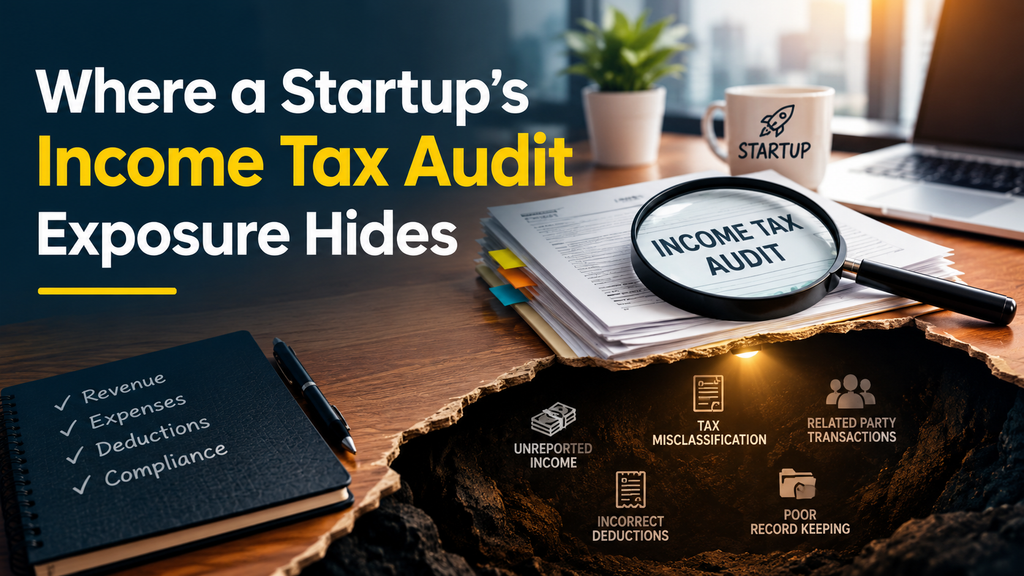
Founders assume exposure lives in aggressive tax positions. In practice, it lives in missing paperwork and unreviewed defaults. Five areas deserve your first look.
R&D credits and software costs. If you claimed a research credit, you need contemporaneous records that tie engineering hours to qualifying work. Rebuilding that documentation after a notice arrives costs far more than building it now. Rules for deducting software development costs also shifted: the 2017 US tax law forced companies to capitalize and amortize research spending starting in 2022, and Congress changed the treatment again in 2025. Confirm current treatment with your CPA, then check that your returns match it.
Worker classification. Engineers you pay as contractors can draw an examiner’s attention when they keep fixed hours, use your tools, and follow your direction. Compare each contractor agreement against how the work actually happens.
Indirect tax nexus. After the Supreme Court’s 2018 decision in South Dakota v. Wayfair, states can require remote sellers to collect sales tax based on economic activity alone, without a physical presence. A SaaS company with customers in many states may owe registrations it never filed. Map your revenue by state and compare it against the registrations you hold.
Equity compensation. Option grants need a defensible 409A valuation, and exercises and RSU vesting trigger withholding and reporting duties. Pull every grant since incorporation and match each one to payroll records.
Related-party and founder expenses. Personal charges on the company card, loans to founders, and payments to a foreign subsidiary all invite questions. Label each one in your ledger and keep the agreement that supports it.
Each area leaves a paper trail. An income tax audit tests whether that trail exists and whether it agrees with your filed return.
Run a mock income tax audit in two weeks
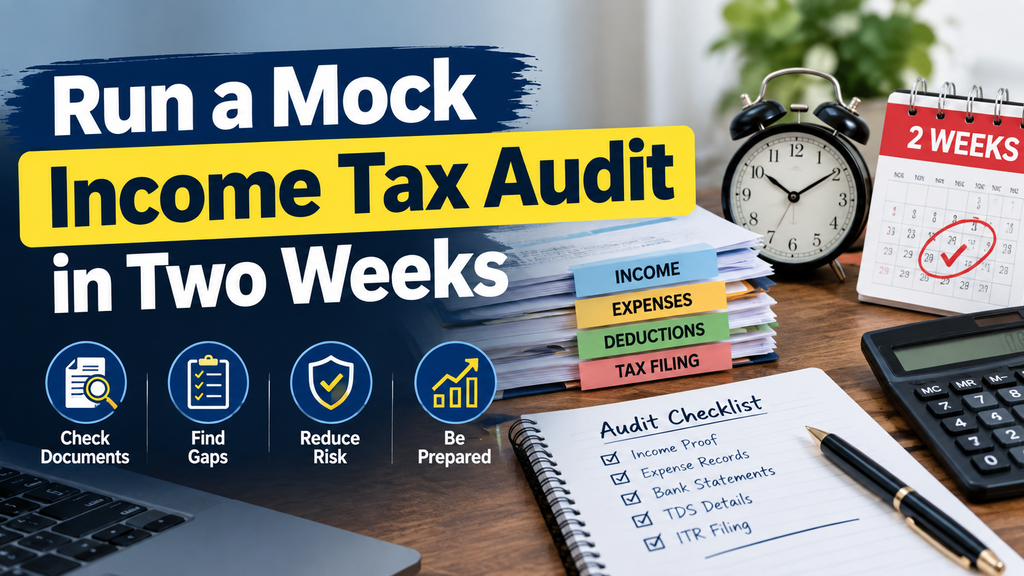
Time-box it. Technical teams know what happens to unscoped projects: they drift.
In week one, assign a single owner, usually your finance lead or fractional CFO. Pull the last three years of filed returns and reconcile each against the general ledger, bank statements, and payroll reports. Where the numbers disagree, log the gap and a suspected cause. Fix nothing yet. A clean list of gaps is your deliverable.
Automate the boring parts. Export your ledger and payroll data, then write a script that flags three things: payments to individuals above your reporting threshold with no matching information return, transactions with no attached invoice, and equity events with no corresponding withholding entry. An hour of scripting replaces a day of spreadsheet scrolling and gives you a repeatable check for next year.
In week two, bring in an outside CPA who did not prepare your returns. A fresh reviewer catches assumptions the original preparer stopped seeing. Request a fixed-fee, scoped review of your gap log, and require a written summary that ranks each finding by dollar exposure and effort to fix. Then build an evidence folder for every major return line: the line itself, the ledger entry, the source document, and one sentence explaining your position.
Finish with a fix schedule. Sort findings into three bins: amend a return, register or remit missing taxes, and improve documentation. Give each item an owner and a date. Some fixes, such as voluntary disclosures and amended filings, carry legal consequences, so review them with a tax attorney before you file anything. A well-scoped income tax audit ends with decisions, not a report that sits unread in a shared drive.
The ROI math you can check yourself

Skip vendor statistics and run your own numbers. Costs: internal hours plus the CPA’s fixed fee. Benefits: avoided penalties and interest, shorter diligence, and fewer indemnity holdbacks.
Consider a hypothetical Series A company that burns $400,000 a month. A week of slipped closing consumes roughly $92,000 of runway. Suppose the self-review costs $10,000 in CPA fees plus forty internal hours. If it trims even one week from a future diligence process, it pays for itself many times over. These figures are illustrative, so substitute your own burn rate and quotes.
Now add the downside. Investors and acquirers commonly ask sellers to stand behind known tax liabilities, and a buyer who finds unresolved exposure can negotiate a holdback or a lower price. A liability you found and fixed yourself gives them nothing to negotiate. You pay a small, known cost now to cap a large, unknown one later.
Compare two timelines. In timeline A, a diligence team surfaces a contractor misclassification during your Series B, and you scramble to collect three years of agreements while the term sheet clock runs. In timeline B, your mock income tax audit caught the same problem eleven months earlier, your attorney scoped the fix, and your data room holds a one-page memo. Same problem, opposite leverage.
Build the habit into your operating cadence. Repeat the mock income tax audit every year and rerun the reconciliation script every quarter. Add a tax check to your fundraising checklist next to the security questionnaire and the cap table cleanup. Teams that treat an income tax audit like a recurring test suite stop treating it like an emergency.
You review code before it ships, so review your tax file the same way. Run your own income tax audit now, and you decide what the next examiner finds.
Written by sumitmarketing.com