
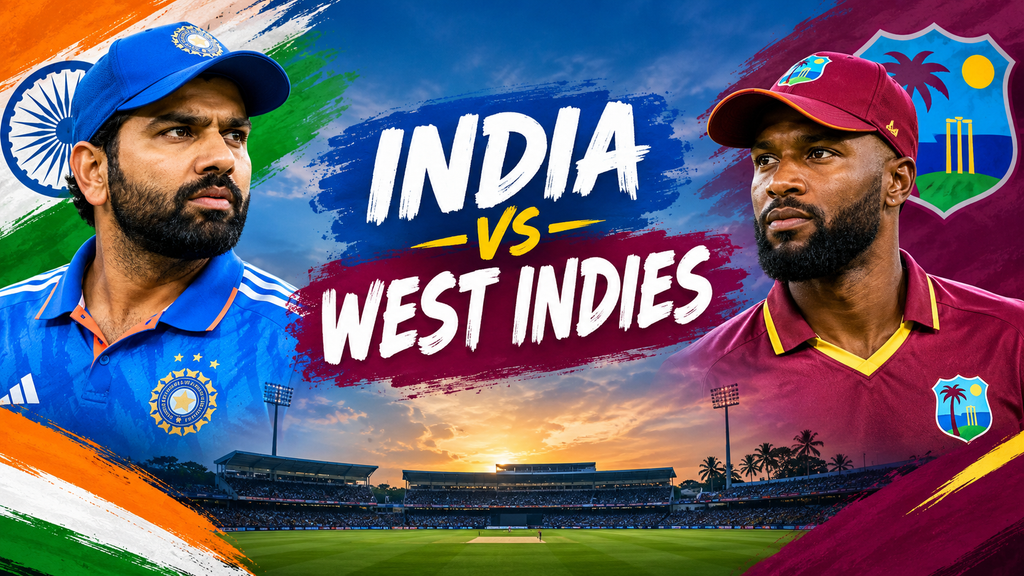
The 1983 World Cup final at Lord’s is the cleanest data point in the India vs West Indies story. West Indies had won the 1975 and 1979 titles and arrived as the heavy favorite. India batted first, scored 183, and then bowled West Indies out for 140 to win by 43 runs. The team with less individual firepower beat the team with more.
Series A founders know this pattern from the other side of the table. A competitor shows a dazzling demo, and their engineers look sharper on paper. Meanwhile your less glamorous team ships every Thursday for six months, and the customer renews with you. The India vs West Indies result of 1983 follows the same logic: a plan executed under pressure beats a gifted roster improvising.
I am drawing an analogy, not claiming cricket causes startup outcomes. But the analogy holds up when you look at what the winner did. India set a modest total and built its whole plan around defending it with disciplined medium-pace bowling. It accepted a constraint and designed around it. Your constraint is runway, and the India vs West Indies final shows what a team does when it stops pretending the constraint does not exist.
Most early-stage teams do the opposite. They plan as if they had 36 months of cash and a team of ten-year veterans. Then they miss a quarter, panic, and rewrite the roadmap. India in 1983 picked a plan that worked at 183 runs and executed it ball by ball. Your equivalent is a plan that still works at your current burn rate, with the team you have today.
India vs West Indies in 2016: Speed Beats the Bigger Bench
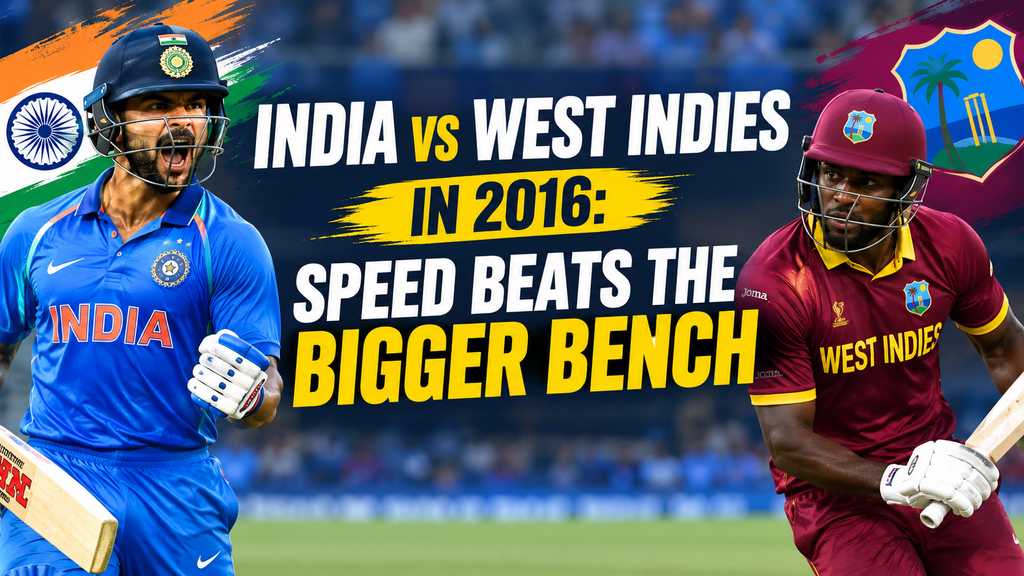
Flip the result and the lesson sharpens. In the 2016 T20 World Cup semi-final at the Wankhede Stadium, India posted 192 for 2, with Virat Kohli finishing on 89 not out. West Indies chased 193 and won by seven wickets with two balls to spare, and Lendl Simmons made 82 not out. India vs West Indies that night favored the side with the sharper plan for that exact format, not the side with the deeper roster or the home crowd.
West Indies had built that team around T20 specialists, players who work in franchise leagues and understand the format’s tempo as well as anyone. They did not try to be good at everything. They picked one game and optimized for it.
That is a Series A move. You cannot match an incumbent feature for feature, because you lack the budget and the headcount. You can beat them at one workflow, one customer segment, or one integration they ignore. ROI at your stage comes from concentration, not coverage. Every engineer-week you spend on a feature the incumbent already ships is a week you do not spend on the narrow thing that wins your first fifty customers.
The 2016 India vs West Indies semi-final also warns incumbents. India had the bigger name and the home crowd, and still lost to a focused opponent playing its preferred format. If you lead a category, assume a challenger is studying your slowest workflow right now. The faster you ship fixes there, the less room that challenger has.
India vs West Indies Today Shows What Compounding Infrastructure Looks Like
Recent results show the long-term payoff of building systems. In July 2023 at Dominica, India beat West Indies by an innings and 141 runs. R Ashwin took 12 wickets in the match, and Yashasvi Jaiswal scored 171 on debut. In October 2025, India beat West Indies 2-0 in a home Test series.
Those scorelines come from a pipeline, not luck. India has run the Ranji Trophy since the 1934-35 season and added the Indian Premier League in 2008, which gives young players regular high-pressure matches before they reach the national side. I cannot give you an ROI figure for that pipeline, and I will not invent one. What the record shows is that a deep, repeated feeder system produced a debutant who performed immediately.
West Indies still produce extraordinary individuals. My read of the India vs West Indies Test results is that the gap comes from depth and repetition, not from a shortage of talent. A great individual shows up occasionally. A good system shows up every match.
Your version of the pipeline is the unglamorous machinery inside your company: hiring loops, onboarding docs, CI/CD, and the cadence of customer feedback. A new engineer who ships a production change in week one is your Jaiswal moment. The system carried the load before the individual walked in. If a new hire needs three months to ship, you have a talent-dependent company, and every departure will hurt you.
Founders often treat this machinery as overhead to defer until Series B. The cricket record argues the opposite. India did not build its feeder system after it needed it. It built the system first, and the results arrived years later, which is exactly how compounding works.
What Founders Take From India vs West Indies on Monday
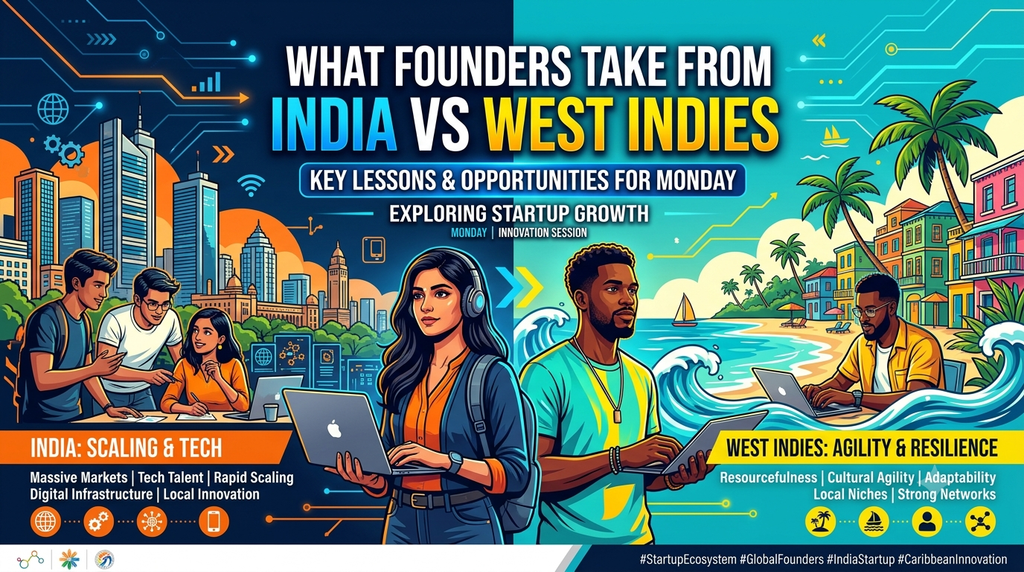
Cricket offers no startup playbook, but the India vs West Indies record supports four concrete moves.
- Pick one format. Write down the single workflow you will beat the incumbent at this quarter, and cut work that does not serve it. West Indies won in 2016 by optimizing for one game.
- Build the feeder system before you need the star. Document onboarding so a new hire can ship a production change in the first week, and track how long it takes. Treat that number as a core metric.
- Design for your actual constraint. India’s 1983 plan assumed a low total, not a big one. Define your plan at your real runway, with your real team, and name the milestone you will defend.
- Treat your lead as temporary. India held no permanent edge over West Indies, and the 2016 semi-final proved it. Review the slowest workflow in your product every month, because a focused challenger will find it first.
None of these moves require new budget. They require choosing a plan and holding it when the scoreboard pressure rises, which is what India did at Lord’s.
The India vs West Indies story keeps repeating because talent starts the game and systems finish it. Build the system while the scoreboard still reads zero.
Written by sumitmarketing.com