
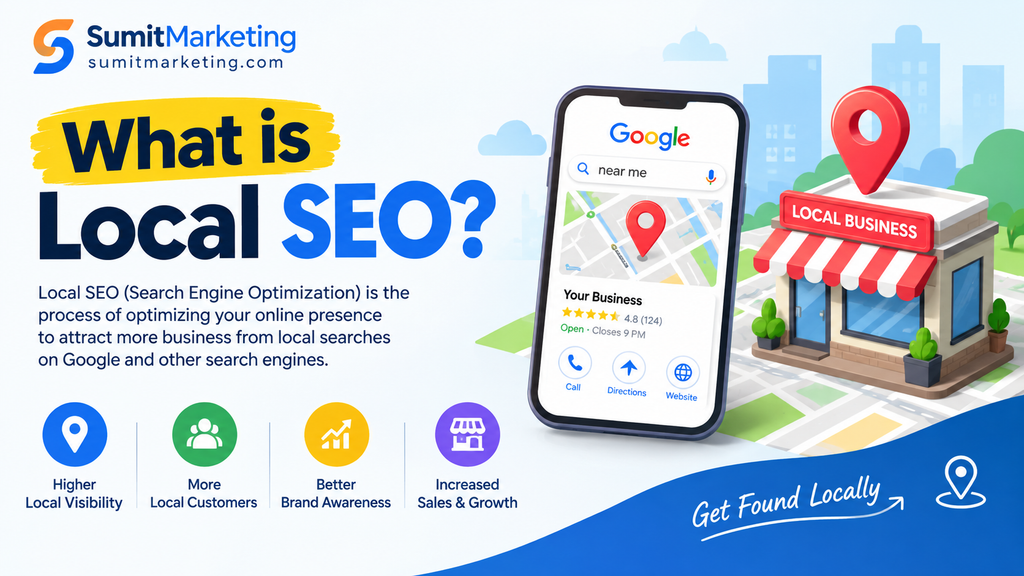
Local SEO is the work of showing up when someone searches with a place attached: “physio near me,” “EV charger Austin,” “accountant in Leeds.” For many of those queries, what is local seo, Google skips the usual blue links and shows a map pack, three business listings stacked above everything else. Your blog doesn’t compete there. Your listings do.
Google names three factors that decide who lands in that pack: relevance, distance, and prominence. Relevance is how closely your listing matches the query. Distance is how far you sit from the searcher, or from the place they typed. what is local seo, Prominence is how well known your business looks, and reviews, links, and mentions all feed it.
People often describe what is local seo as a vague reputation game. It isn’t. You control relevance through your categories, services, and profile data. You influence prominence by collecting reviews and earning mentions. You can’t move a building, but you can open the next location where demand already exists. Three inputs, and you own most of them.
Where It Pays Off at Series A

Not every company needs this channel. A pure software product with no physical footprint and no buyers tied to a city gains little from it. Local search earns its keep when customers pick you by location: clinics, fitness studios, repair networks, restaurants, service marketplaces, anything with a van or a front door.
Take a hypothetical telehealth company that opens twelve lab sites for blood draws. Patients search “blood test near me” at the moment they need one. Paid search bills you for each of those clicks. A verified, well-kept Google Business Profile for each lab can surface in the map pack without a per-click fee. The company is invented, but the mechanism holds: high intent, no click cost, and a listing you can edit yourself.
Now picture a home-services marketplace that signs up technicians across ten cities. Customers compare providers by distance and reviews, so each city needs its own local presence. The team that adds a listing launch to every city rollout, next to hiring and licensing, builds visibility while supply grows. The team that waits a year starts from zero.
Paid acquisition stops the day the budget stops. A listing with steady reviews and consistent data keeps working while your engineers ship features. That difference turns what is local seo into a capital efficiency question, what is local seo, and capital efficiency is the question your board asks anyway.
What Is Local SEO Made Of? Four Jobs
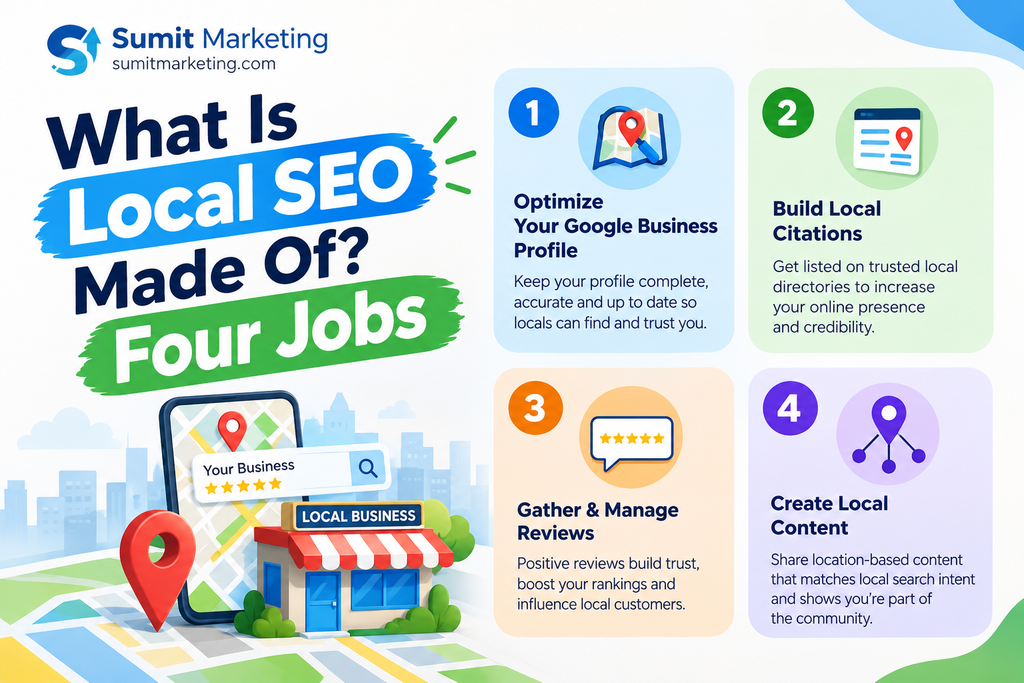
Forget the sprawling checklists. Four jobs carry most of the weight.
Claim and complete every Google Business Profile. what is local seo, Verify each location, pick the most specific primary category you can, and fill in hours, services, photos, and a booking link. Category choice matters most, because it drives relevance. Google’s own guidance says complete, accurate information helps businesses match relevant searches.
Standardize your name, address, and phone number. Keep one canonical record in your database and push it to every directory from that source. Conflicting records confuse customers and search engines alike. what is local seo, If you already believe in a single source of truth for your product data, apply the same rule here.
Build location pages that say something. Each page needs its own address, real details about the local service, an embedded map, and schema.org LocalBusiness markup. Swapping only the city name across fifty pages gives Google little reason to rank any of them, and its spam policies target thin, near-duplicate pages directly.
Ask for reviews on a schedule. Trigger a text or email after every completed service, and answer every review, good or bad. Google’s policies ban review gating and incentives, so ask every customer and offer nothing in return.
Wire these four jobs into your ops stack once. After that, what is local seo turns into maintenance, and your engineers can automate most of it.
How to Measure It and Move Fast

Speed matters more than polish here. Start with verification, because it takes days and everything else depends on it. Fix your address data next, then ship the location pages, then switch on the review flow.
Measure with tools you already have. Google Business Profile reports calls, direction requests, and website clicks for each location. Add UTM parameters to the website link in every profile, so your analytics can separate map-pack visits from organic and paid sessions. Then connect those sessions to bookings or revenue in your own database. Once that link exists, you can calculate cost per acquired customer for local search and set it beside your paid search number.
Track three figures every week: profile actions per location, review count and average rating per location, and map-pack rank for your five most valuable queries. A rank tracker that uses a geographic grid shows how your visibility changes as the searcher moves across a city, and that exposes weak neighborhoods fast. When one location lags, audit its categories, review pace, and page content before you spend a dollar.
Two mistakes will hurt you. Never buy reviews or invent locations, because Google suspends profiles that break its guidelines and a suspension wipes out your visibility overnight. And never treat the work as a one-time project. Competitors collect reviews every week, so your ranking reflects your ongoing effort, not last quarter’s.
If your team still argues about what is local seo, settle it with an experiment: one metro, five locations, one owner, thirty days. Complete the four jobs, tie sessions to revenue, and let the numbers tell you where to expand. Anyone can run that test, and few of your competitors bother to.
Ask what is local seo once and the answer fits on a sprint board: verify, standardize, collect reviews, measure. Pick one metro this quarter, run the test, and let the revenue data make the case for the rest.
Written By sumitmarketing.com