
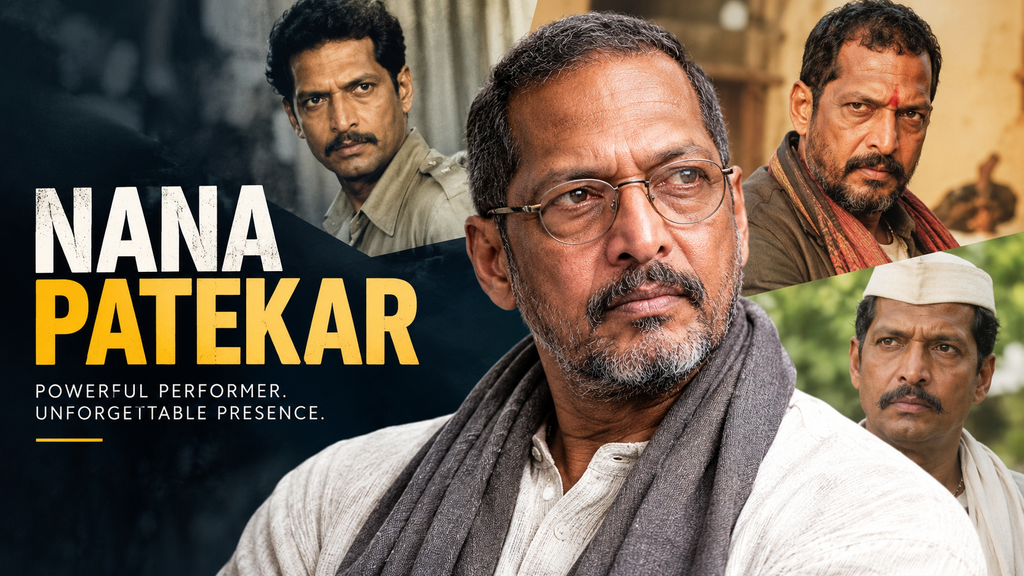
Nana Patekar did not arrive in Hindi cinema as a leading man. He came up through Mumbai theatre, studied at the Sir J.J. School of Art, and made his film debut in Gaman in 1978. He spent his first decade in films building credits in character parts and ensemble casts. Then Parinda arrived in 1989, and his turn as the gangster Anna won him the Filmfare Award for Best Supporting Actor.
Look at what that sequence means for your team. Nana Patekar did not spread across ten genres to find fit. He sharpened one signature: controlled menace, clipped delivery, and a stare that carries the scene. Directors learned what he delivered and hired him for it. Your buyers behave the same way. They hire a product for one sharp outcome, then extend trust to everything else you build.
Anna was a supporting role in a film built around other leads, and it still earned him the industry’s top supporting honor that year. That is a wedge. A small, undeniable piece of value outweighs a long feature list.
Founders who ship a broad roadmap right after Series A often dilute the one thing customers actually pay for. Run a simple test this quarter. Ask your ten best customers which single feature they would keep if you deleted everything else. Nana Patekar’s early career suggests you will hear one answer, repeated. Build around that answer, price against it, and let the wider suite follow revenue instead of leading it.
Nana Patekar Treats Preparation as a Product Feature
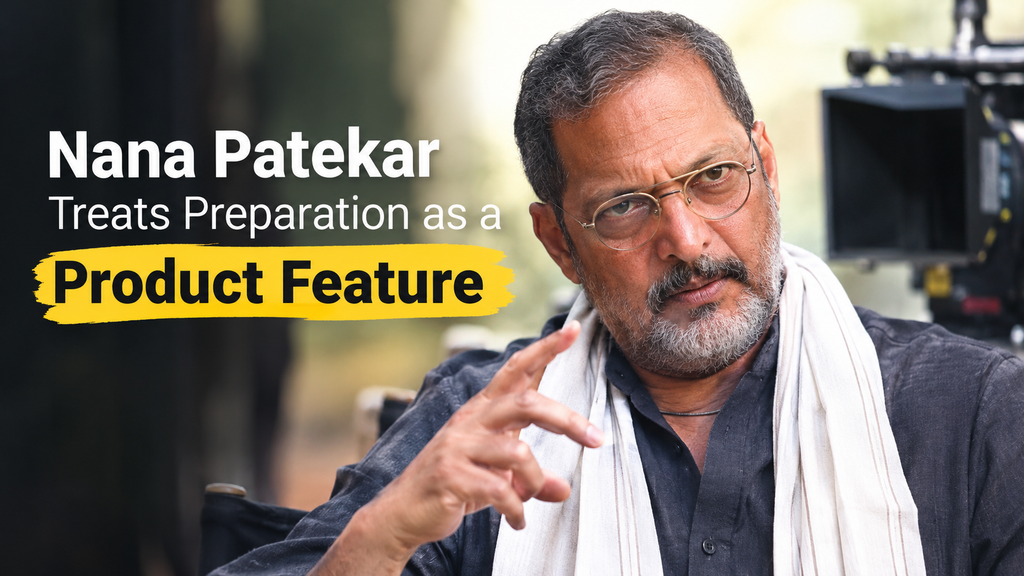
In 1991, Nana Patekar wrote and directed Prahaar, a film about military discipline and a commando unit. Reports from the period say he went through real military training to prepare for it. Whatever the exact details, the film’s commitment to procedure and physical realism became its calling card. He did not guess what the world he portrayed looked like. He went and stood inside it.
Technical founders skip this step more often than they admit. They build from assumptions, ship, and then wonder why activation stalls. Customer immersion costs less than a failed quarter. Sit in on five support calls. Watch three customers use your onboarding without speaking. Spend a day inside the workflow your product claims to improve.
Nana Patekar’s approach maps cleanly onto a few habits you can adopt this month:
- Shadow the user. Sit with an operator for a full shift before you scope the next feature.
- Write the scene before you shoot it. Draft the customer’s before-and-after workflow in plain language, then check that your build changes the “after.”
- Rehearse the demo against real data. Use a customer’s messy inputs, not your clean sandbox.
Preparation also compounds. Ab Tak Chhappan in 2004 cast him as Sadhu Agashe, an encounter-specialist police officer, and critics still cite the performance as one of his strongest. Roles like that come from accumulated credibility, the same way referenceable customers come from accumulated delivery. Early reference customers shorten later sales cycles, so treat each one as an asset you build on purpose.
Speed matters, but speed without contact with reality burns runway. Nana Patekar’s habit of doing the groundwork first shows that preparation is not the opposite of moving fast. It lets you move fast in the right direction.
Nana Patekar Shifts Formats Without Losing the Core
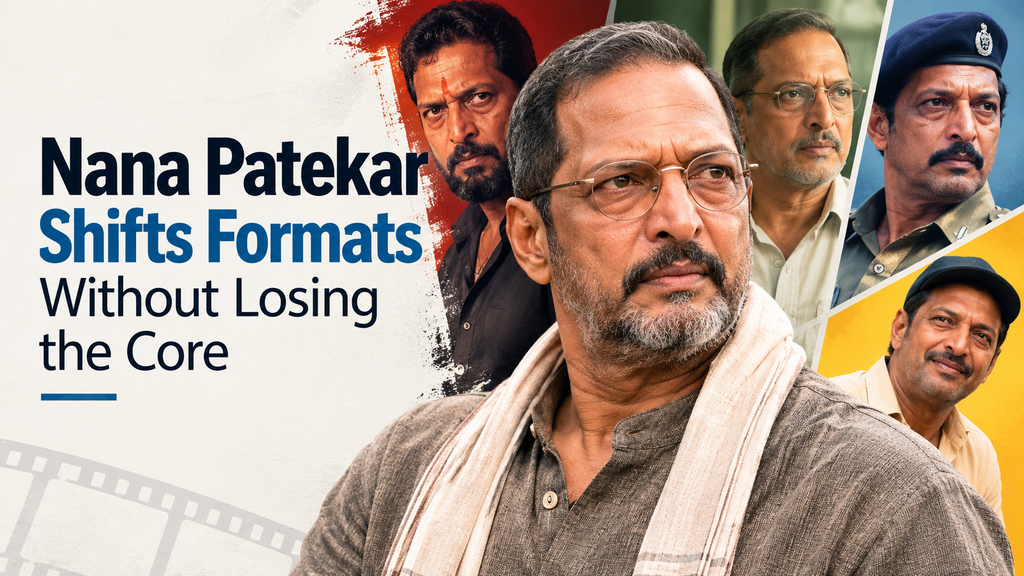
Nana Patekar won the National Film Award for Best Actor for Krantiveer in 1994, a film in which he plays a journalist-turned-crusader whose fury drives the story. In 2007, he appeared in Welcome as Uday Shetty, a gangster-turned-comic figure, and audiences laughed at him instead of fearing him. In 2016, he led the Marathi drama Natsamrat, a stage-rooted story of an aging actor. Three formats, three tones, one recognizable force underneath.
That is the pivot pattern founders should study. He changed the genre, the language, and the register, yet the intensity that made him bankable stayed intact. He did not abandon his core to chase a trend. He carried it into new territory.
Apply that to your go-to-market. If your product wins with mid-market logistics teams, you can move toward enterprise or sideways into adjacent verticals. Keep the underlying advantage constant: the data model, the integration depth, or the speed your customers already love. Change the packaging, the pricing, and the pitch.
Founders get pivots wrong in two directions. Some refuse to move when the market tells them to. Others throw away the asset that made them winners. Nana Patekar’s range shows a third path: identify what customers actually value, then deploy it in the next arena. Before any pivot, write one sentence naming the core advantage you keep. If you cannot write that sentence, you are not pivoting. You are restarting.
Also notice the sequencing. He did not stack three experiments at once. Each move built on a base of earned trust in the previous one. Limit your team to one major pivot per cycle, and measure it against a clear metric before you attempt the next.
Nana Patekar Turned Credibility Into a Second Venture

By 2013, Nana Patekar had earned the Padma Shri, India’s fourth-highest civilian honor, for his work in cinema. In 2015, he used that standing to co-found the NAAM Foundation with fellow actor Makarand Anaspure. The foundation focuses on drought relief and support for farming families in Maharashtra. He did not start from zero. He launched a second venture on top of a reputation he spent decades building.
Series A founders can run the same play. Your first product earns you trust with a specific customer base. That trust is a distribution channel. When you launch an adjacent product, an integration marketplace, or a services arm, you start with warm buyers instead of cold lists. Customers who already rely on you will take a meeting for your second offering faster than any stranger will.
Nana Patekar also shows the discipline this requires. A foundation lives or dies on follow-through, because donors and beneficiaries judge it on delivery. A new product line works the same way. Your existing customers will test the second launch against the standard the first one set. If it underdelivers, you spend the credibility you banked.
So treat reputation as working capital and spend it deliberately:
- Launch the second product only after the first one retains customers reliably.
- Offer it first to your best accounts and collect hard feedback before a public release.
- Report results to those customers openly, including what failed.
Founders who follow that order turn trust into compounding growth. Founders who skip it burn the one asset they cannot buy back.
Nana Patekar never needed ten personas, only one he refused to dilute. Find your Anna, prepare like Prahaar, and spend your credibility only where it compounds.
Written by sumitmarketing.com