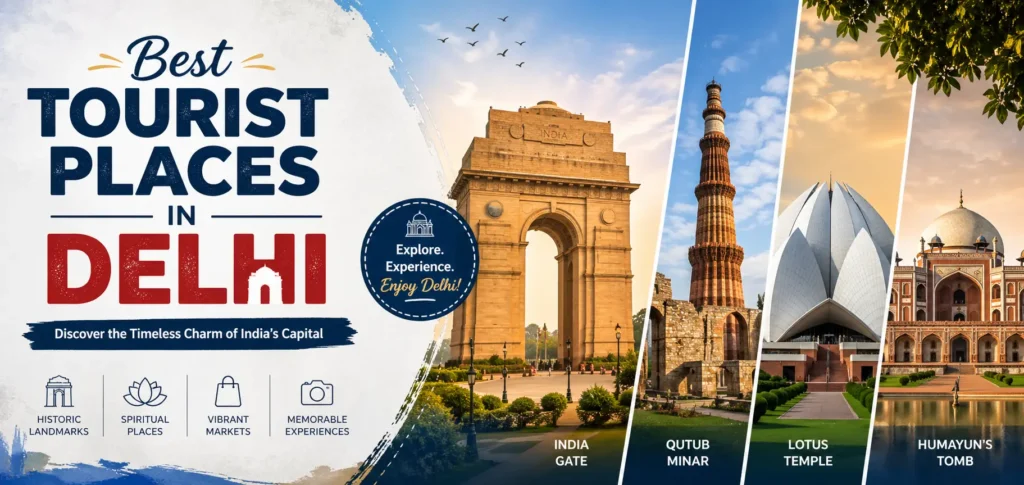
Click any landmark to explore details and travel tips
The Best Tourist Places in Delhi: A City That Rewrites Your Sense of Time
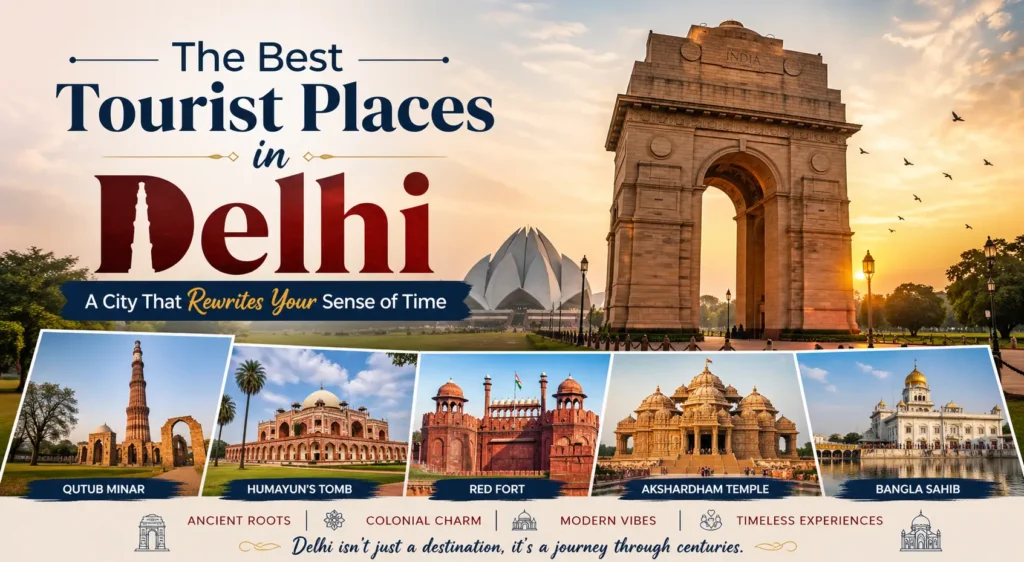
Walk one block in Delhi and you pass a 600-year-old mosque, a street vendor frying jalebis in the same recipe his grandfather used, and a glass office tower casting shadows on both. Delhi does not preserve its history — it lives inside it. For any traveler seeking the best tourist place in Delhi, the harder problem is not finding greatness but choosing where to start.
Old Delhi: Where the Mughal Empire Still Breathes
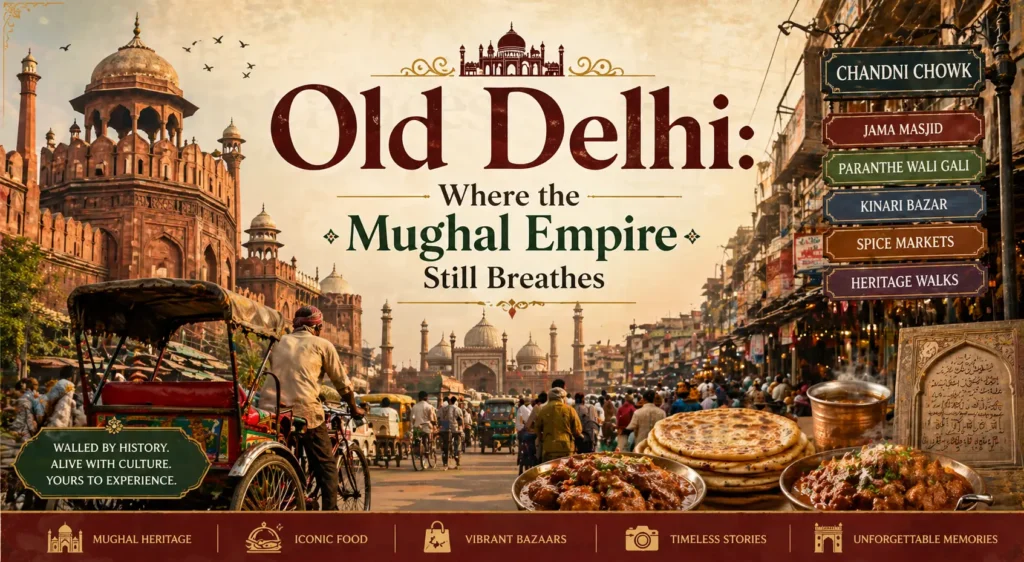
No conversation about the best tourist place in Delhi begins anywhere but the Red Fort. Shah Jahan built this red sandstone citadel in 1638, and it remained the seat of Mughal power for over 200 years. Enter through the Lahori Gate, walk the vaulted shopping arcade, and reach the Diwan-i-Aam — the Hall of Public Audiences — where emperors once held court. The fort does not just tell history; it forces your imagination to reconstruct it.
A short rickshaw ride through the labyrinthine lanes of Chandni Chowk delivers a completely different but equally essential Delhi. Shah Jahan’s daughter Jahanara designed this market in 1650, and the spice sellers, silversmiths, and sari merchants have never really left. The narrow Paranthe Wali Gali serves stuffed flatbreads fried in pure ghee — the recipe unchanged for generations. Chandni Chowk ranks as one of the best tourist places in Delhi not for monuments, but for the unfiltered, unscripted city it shows you.
South Delhi: Where Architecture Became Art
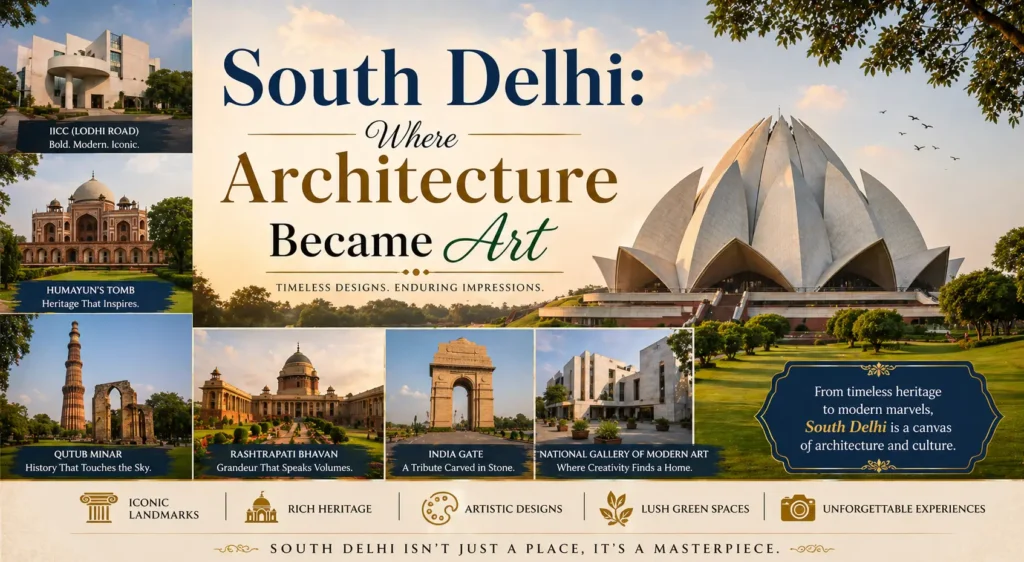
Thirteen kilometres south of the Red Fort stands a minaret that stopped the world in 1193. The Qutub Minar rises 73 metres — the tallest brick minaret ever built — and its intricate Arabic calligraphy spirals upward like a conversation with the sky. The surrounding Qutub complex holds India’s oldest mosque, an Iron Pillar that has resisted rust for 1,600 years (metallurgists still puzzle over this), and layers of Hindu and Jain temples repurposed by successive rulers. Give it three hours, not one.
Humayun’s Tomb, built in 1570 for the second Mughal emperor, earns its UNESCO World Heritage status by being the building that inspired the Taj Mahal. The Persian char bagh garden — divided into quadrants by water channels — frames a double-domed structure in red sandstone and white marble. Visitors who skip this because they plan to see the Taj Mahal make a mistake. This is the original idea, and in some ways the purer one. It also draws a fraction of the Taj’s crowds, making it one of the most peaceful best tourist places in Delhi.
Central Delhi: Monuments That Command the Horizon
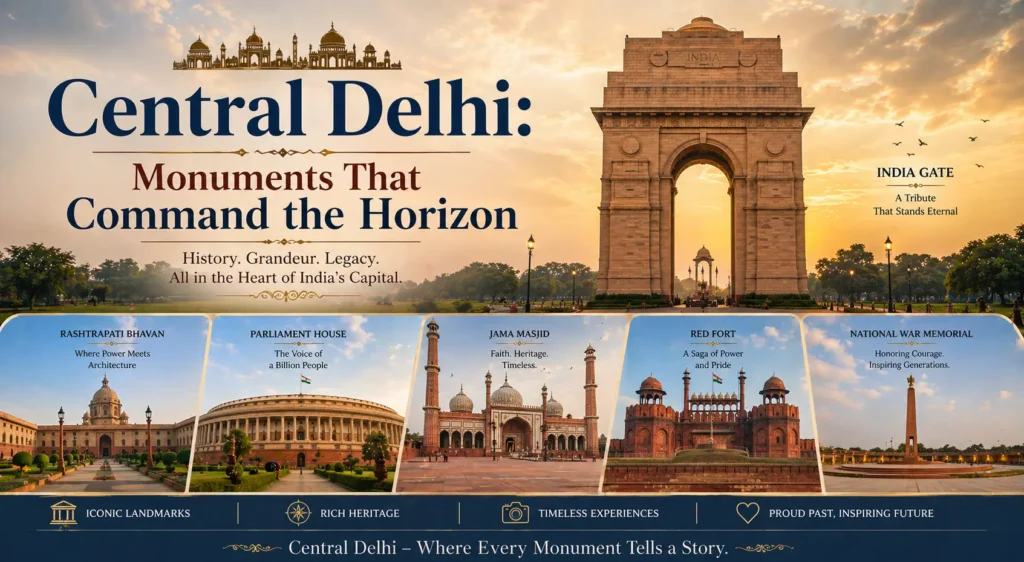
India Gate stands at the eastern end of Rajpath as a 42-metre memorial to the 70,000 Indian soldiers killed in World War I and the Third Anglo-Afghan War. The names of 13,300 soldiers are engraved in the sandstone. By day, children fly kites on the surrounding lawns. By night, the monument glows amber under floodlights while families stroll the wide boulevard. The Amar Jawan Jyoti — the eternal flame — has burned beneath the arch since 1972.
Any ranking of the best tourist place in Delhi must include the Lotus Temple, even though it defies easy categorization. Built in 1986 for the Bahá’í Faith, this white marble structure unfolds like 27 petals of a half-opened lotus. It welcomes worshippers of every religion — or none. Step inside and the city noise disappears completely. The silence is architectural. Over 70 million people have visited since it opened, making it among the most-visited buildings on earth.
Planning Your Visit: The Details That Matter

Delhi rewards the prepared traveler. The single most important decision is timing: October through March brings cool, clear days ideal for walking between monuments. April through June pushes temperatures past 45°C — manageable only with very early morning starts. The monsoon months (July–September) cool things down but add humidity and occasional flooding to the equation.
The best tourist place in Delhi for first-timers is Red Fort, because it anchors the geography and history of everything else. But the most memorable experience often belongs to Chandni Chowk, because no amount of reading prepares you for what your senses encounter there. Budget at least four full days to cover the major sites without rushing. Delhi’s monuments close on different days (Red Fort on Monday, Lotus Temple on Monday, Qutub Minar stays open daily), so plan the sequence before you arrive.
The Delhi Metro connects most major sites cleanly and cheaply. Hire a local guide for Old Delhi specifically — the lanes look identical from the outside, and the stories behind every doorway change what you see entirely.
Delhi does not ask for your attention politely. It takes it. The best tourist places in Delhi — from the Mughal grandeur of the Red Fort to the meditative quiet of the Lotus Temple — share one quality: they make the rest of the world feel briefly smaller. Come with comfortable shoes and an open schedule; Delhi will fill both.