
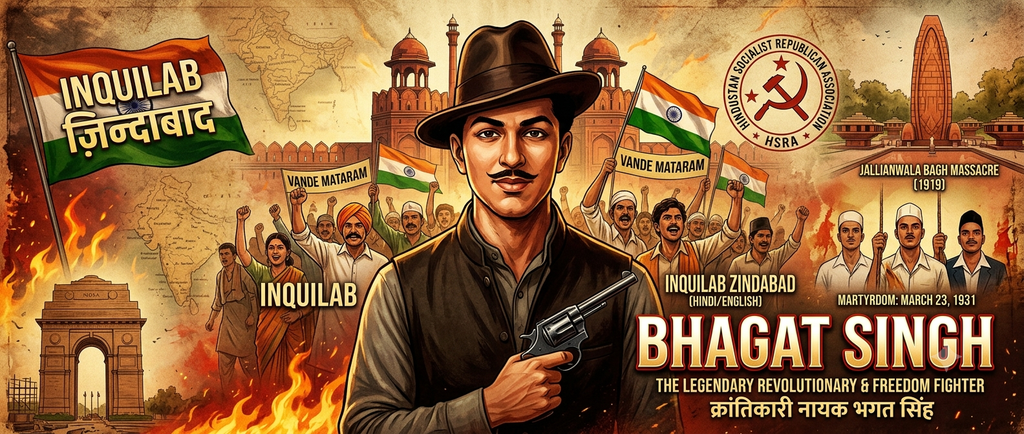
Bhagat Singh led a small organization, the Hindustan Socialist Republican Association, against a state with an army, a police force, and a censored press. He did not try to match that scale. He chose a single act that reached the audience that mattered. On April 8, 1929, he and Batukeshwar Dutt threw two bombs in the Central Legislative Assembly in Delhi during debate on the Public Safety Bill. The bombs killed no one. Both men stayed in the chamber, shouted “Inquilab Zindabad,” and surrendered to the police.
Series A founders face the same asymmetry. Incumbents outspend you on sales headcount, brand, and distribution. You win by finding the one demonstration your buyer cannot ignore: a live benchmark against the incumbent, a workflow that drops from days to hours, or a pilot that ships in two weeks. Bhagat Singh treated the Assembly as a stage, not a battlefield. He picked a venue where lawmakers, newspapers, and the public all watched at once.
Test your own plan the same way. Can you describe your next launch in one sentence, aimed at one named buyer? If not, you have a campaign, not an action. The Assembly action had a date, a venue, a target audience, and a planned ending, because the surrender was deliberate. Most founders plan the demo and forget what happens after the room goes quiet. Decide who follows up, with what offer, within what timeframe, before you run the demo.
Write the Message Before the Moment
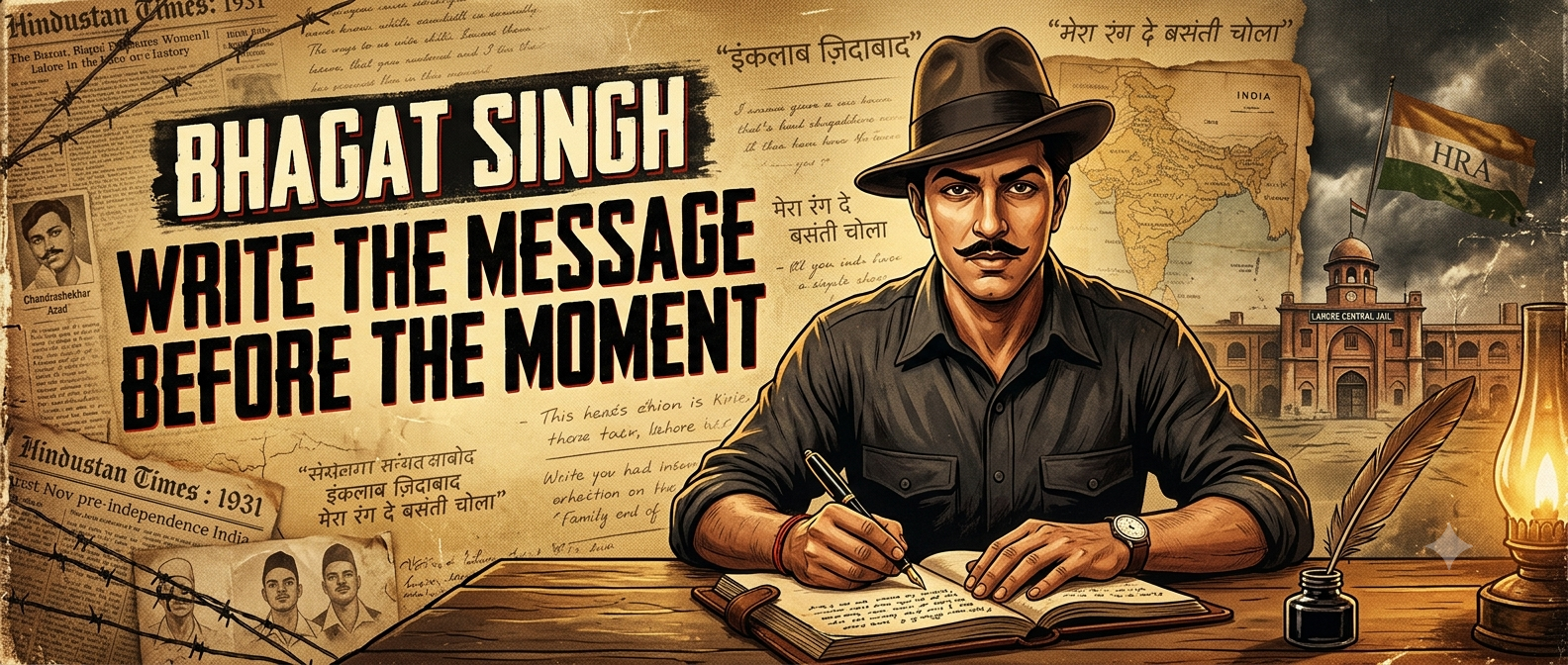
Bhagat Singh did not leave interpretation to the press. He and Dutt scattered leaflets that explained the act and its purpose. The leaflet borrowed a line from the French anarchist Auguste Vaillant: it takes a loud voice to make the deaf hear. The message arrived with the event, so no newspaper had to guess the motive.
The trial that followed gave him a second platform. Bhagat Singh and Dutt used their court statements to lay out their politics, and newspapers carried those statements to readers well beyond the courtroom. He turned the defendant’s chair into a podium.
Founders should copy the sequencing. Draft the customer story, the one-page memo, and the demo script before the launch date, not after. A product announcement without a prepared narrative forces prospects to invent their own, and they will invent a smaller one. Write the sentence you want a buyer to repeat to their CFO, then build the launch to deliver it.
A practical version takes one afternoon. Write three artifacts: the one-sentence claim, the single proof point that backs it, and the reply to the most likely objection. Hand all three to every person who talks to customers. Bhagat Singh’s leaflet worked like a strong landing page: one claim, one reason, no filler.
Bhagat Singh Read Like Learning Was a Deadline
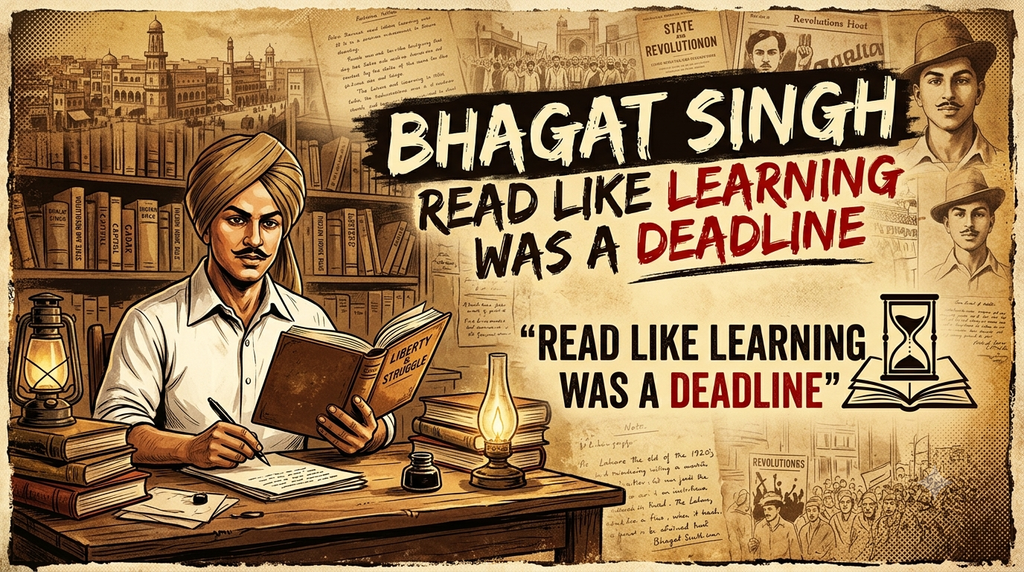
Bhagat Singh read constantly, and he read to sharpen arguments, not to decorate them. In Lahore jail in 1930, he wrote the essay “Why I Am an Atheist,” a plain-prose case that walks through his reasoning step by step. Readers can check his logic because he showed it.
Founders tend to treat reading as a luxury that competes with shipping. That framing costs speed. Competitor teardowns, customer call transcripts, and incident postmortems compress months of trial and error into a weekend. Bhagat Singh’s habit shows how a person with limited time turns other people’s hard-won lessons into faster decisions.
Turn the habit into a rule your team can audit. Every engineer and every account executive brings one external lesson to the weekly meeting: a competitor’s pricing change, a churned customer’s exit reason, a public outage report. The team then changes one decision because of it. Write that decision down. If a month of reading changes nothing, change the reading list.
Writing sharpens the same muscle. Bhagat Singh explained his thinking in full sentences, and full sentences expose weak reasoning fast. Require a one-page written rationale for every roadmap bet above a set cost, and the weak bets die in the draft, not in production.
Hold the Line After the Launch
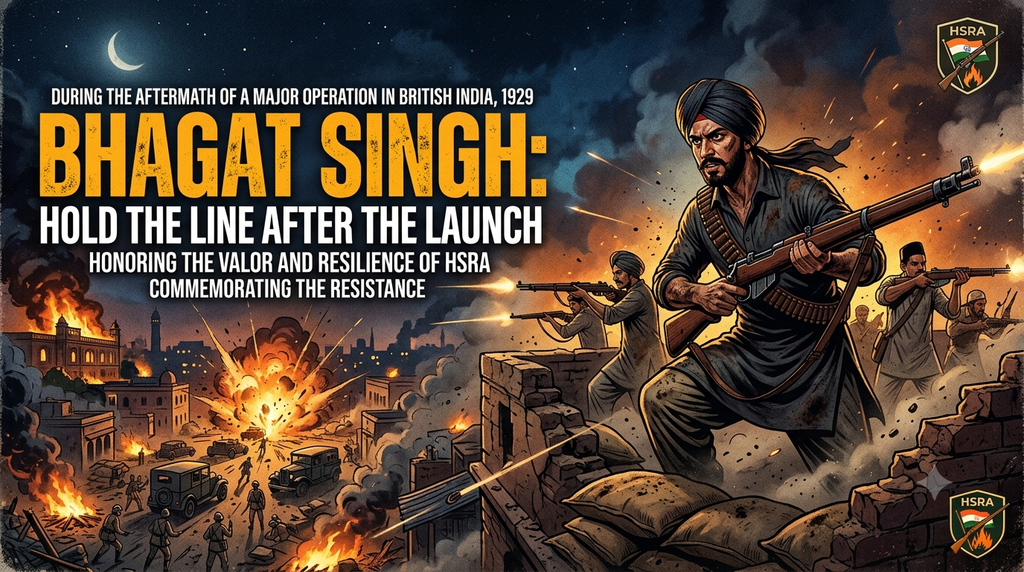
Launches earn attention, but persistence earns results. In June 1929, Bhagat Singh and his comrades began a hunger strike in jail to demand political-prisoner status, better food, and access to books and newspapers. His fellow prisoner Jatin Das died on September 13, 1929, after 63 days without food. Bhagat Singh ended his strike on October 5 after 116 days. The strike drew sustained national attention to the prisoners’ demands.
Founders can borrow the discipline without the danger. After launch day, your message has to survive the ninth sales call, the third pricing objection, and the slow quarter. Repeat the claim, hold the price, and resist the urge to rewrite the story each time a prospect pushes back. Consistency compounds where novelty fades.
Do not copy the parts that cost lives. Bhagat Singh took part in political violence, and the British hanged him in Lahore on March 23, 1931, at age 23, alongside Sukhdev and Rajguru. This article borrows his method of communication and endurance, not his tactics of force. Founders can take the clarity, the restraint, and the stamina, and leave the rest in the history books.
Bhagat Singh had no runway and no second attempt, and he still delivered a message that outlived the empire he confronted. Founders with actual budgets have no excuse for a vague launch.
Written By sumitmarketing.com