
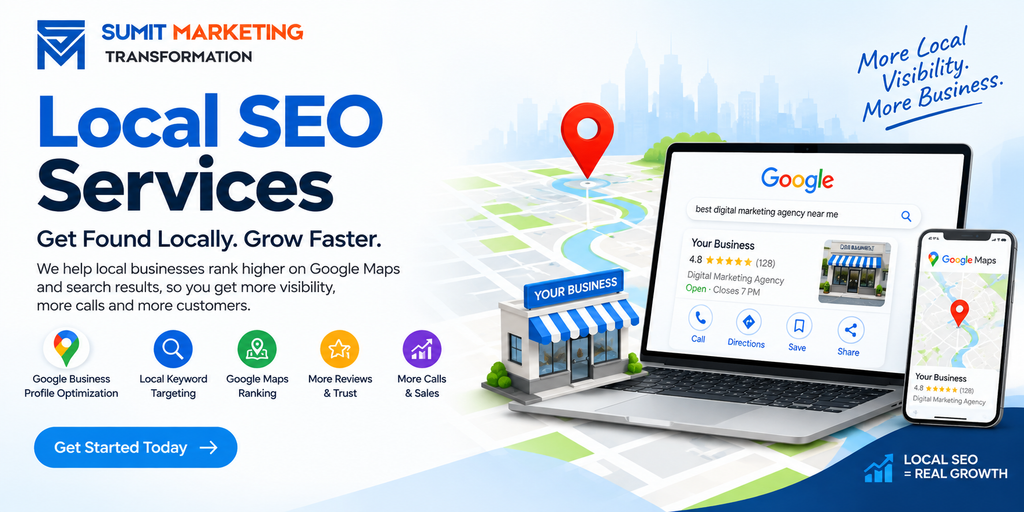
Google documents how local ranking works: relevance, distance, and prominence decide which businesses appear in map results. Engineers should appreciate that, because the platform published the spec. Local SEO services work directly on those three inputs. They tighten category selection and service descriptions to raise relevance, keep address and service-area data accurate so Google measures distance correctly, and build reviews, citations, and links to raise prominence.
Compare that with broad content SEO. A blog post targeting “workflow automation” competes with every SaaS vendor on the internet and takes months to rank, if it ranks at all. A search for “emergency HVAC repair” or “orthodontist open Saturday” carries purchase intent, and a short list of local listings gets the first look. Someone searching for emergency repair wants a provider today, so the sales cycle shrinks to hours or days. Local SEO services target searches that already carry purchase intent, which means you skip the awareness stage entirely.
If your Series A company books appointments, dispatches technicians, or runs clinics and branches, local SEO services shorten the path between a search and a paying customer. Not every startup qualifies, though. A pure API product with no geographic buyers should skip this channel. A marketplace with supply in specific cities, a clinic network, or a field-services platform should not.
Local SEO services pay back faster than paid ads
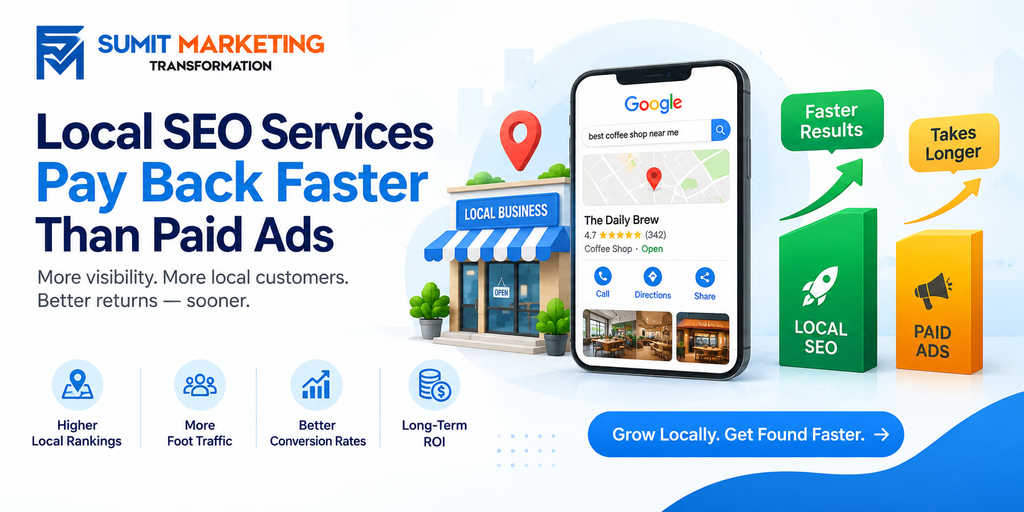
Run the math with your own numbers, starting from this modeled example. Assume paid search costs you $60 per booked appointment. Assume you hire local SEO services for $3,000 a month, and after a three-month ramp they generate 80 organic bookings monthly. Those 80 bookings would cost $4,800 through paid search. You save $1,800 every month and redirect that budget to channels that need it. This is a model, not a benchmark, so replace every number with your actual CAC and conversion data.
Paid clicks stop the moment you cut the budget. A strong profile, a deep review base, and consistent listings keep producing without per-click fees, though they need ongoing maintenance. That asymmetry makes local SEO services attractive at Series A, where CAC payback shapes your next fundraising conversation.
Speed also favors you. Claiming and fixing a Google Business Profile takes days. Review systems and location pages take weeks. Local SEO services give you an answer within a quarter, not a year, so you can set a 90-day test with a kill threshold. If booked revenue per dollar spent trails your paid channel at day 90, stop and reallocate. You lose one quarter of a modest retainer, not a year of runway.
What local SEO services actually do each week
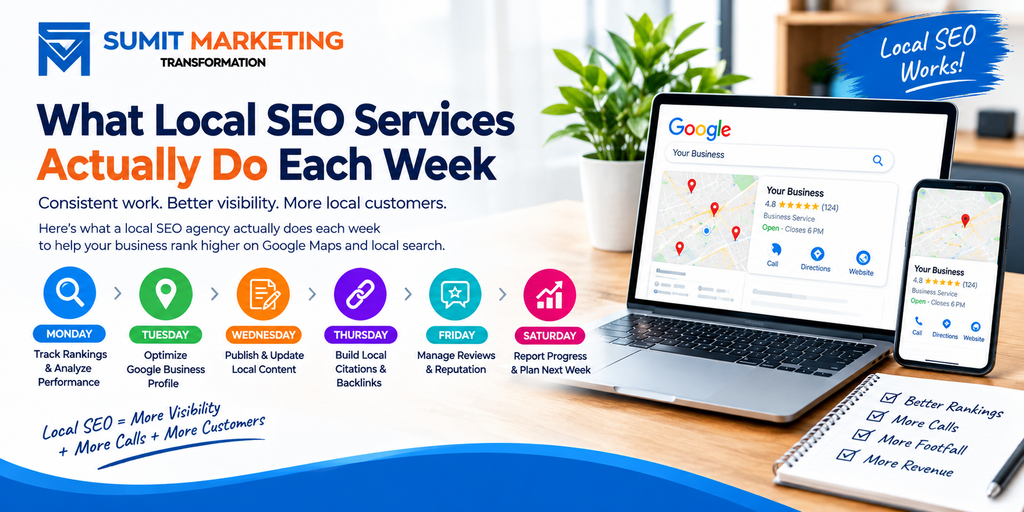
Vague retainers waste money, so demand specifics. Strong local SEO services cover five workstreams you can audit:
- Profile audit: primary category, secondary categories, services, hours, attributes, and photos.
- Citation cleanup: identical name, address, and phone number across major directories and data aggregators.
- Review engine: an automated request that fires when a job closes in your CRM, plus a reply to every review.
- Location pages: one page per city and service, with unique content and LocalBusiness schema markup from schema.org.
- Measurement: UTM-tagged profile links, call tracking, Search Console data, and local rank tracking by neighborhood.
Technical founders can build part of this themselves. The Google Business Profile API lets you manage listings across many locations, and a webhook from your job-completion event can trigger the review request. A good vendor of local SEO services handles strategy and execution while your team wires the data. That division of labor keeps costs down and keeps ownership with you.
Treat local SEO services like an engineering-adjacent system with defined inputs, outputs, and logs. Every workstream above produces a number you can check: listings corrected, reviews gained, pages published, calls tracked, bookings closed. If a vendor cannot show you those numbers each month, you have a vendor problem, not a channel problem.
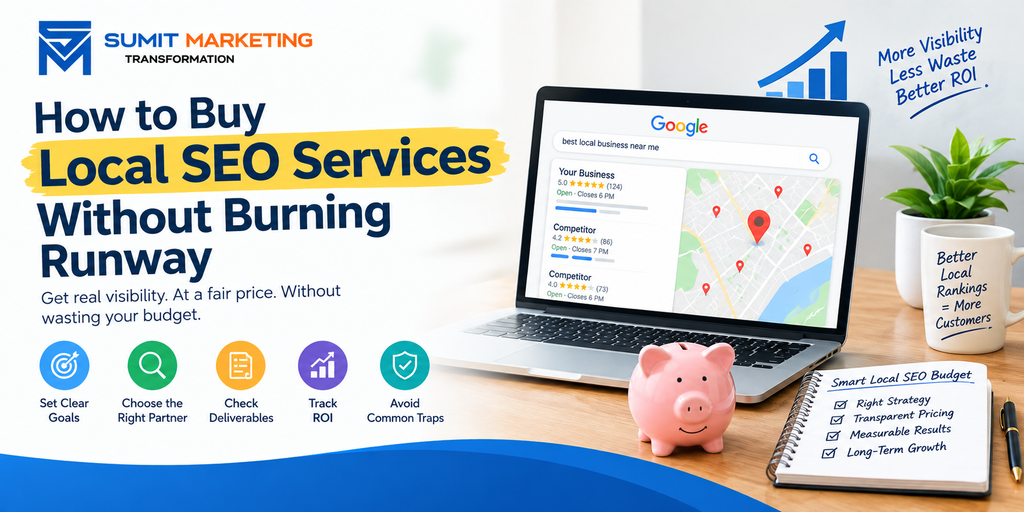
How to buy local SEO services without burning runway
Start with one city, not ten. Picture a clinic-booking startup that picks its densest market, runs the 90-day test, and expands only after booked appointments beat paid CAC there. That pilot costs a fraction of a national rollout and produces data your board can read.
Before you sign for local SEO services, hold every vendor to four requirements:
- You own the accounts. You hold the Google Business Profile as owner, and the agency gets manager access.
- A baseline comes first. The vendor reports your current calls, direction requests, and bookings before any work starts.
- Reports include raw data. A rank screenshot proves nothing; call logs and booking counts prove something.
- No guaranteed rankings. Google’s own guidance says no one can guarantee a top spot, so a vendor who promises one is misleading you.
Avoid shortcuts that risk suspension. Stuffing keywords into your business name, creating fake locations, and buying or incentivizing reviews all violate Google’s policies. A suspended profile wipes out your channel overnight, and no vendor fee covers that loss. Ask every vendor of local SEO services how they earn reviews and build citations, and walk away if the answer involves anything you would not want Google to read.
Pick one city, set a 90-day target, and track booked revenue instead of rankings. If local SEO services beat your paid CAC there, scale them; if they lose, you spent one quarter and bought a clear answer.
Written by sumitmarketing.com