

UEFA launched the Nations League in 2018 to replace most international friendlies. Coaches treated those matches as rehearsals, and fans treated them as background noise. Federations played them anyway because the calendar needed filling.
Your company runs its own friendlies. You have the pilot with no success metric, the weekly sync with no decision, and the design partner who requests features and never signs. Each one burns engineering hours and produces nothing you can bank.
The Nations League changed the incentive, not the effort. The players, stadiums, and travel stayed the same, but each match now pushes a team toward promotion, relegation, or a qualifying playoff. Nothing about the talent changed. The stakes did.
Copy that move this week. List every recurring commitment your team carries: pilots, standing meetings, side projects, partner calls. Attach a consequence to each one. A pilot with a 30-day conversion target is a competitive fixture. A pilot without one is a friendly. If you can’t name what a commitment earns or costs when it ends, cut it.
Founders at your stage rarely lack effort. They lack a scoreboard. The Nations League shows that a scoreboard can turn low-value activity into high-value activity without adding a single person.
Tier Your Opponents, Then Compete Where You Can Win
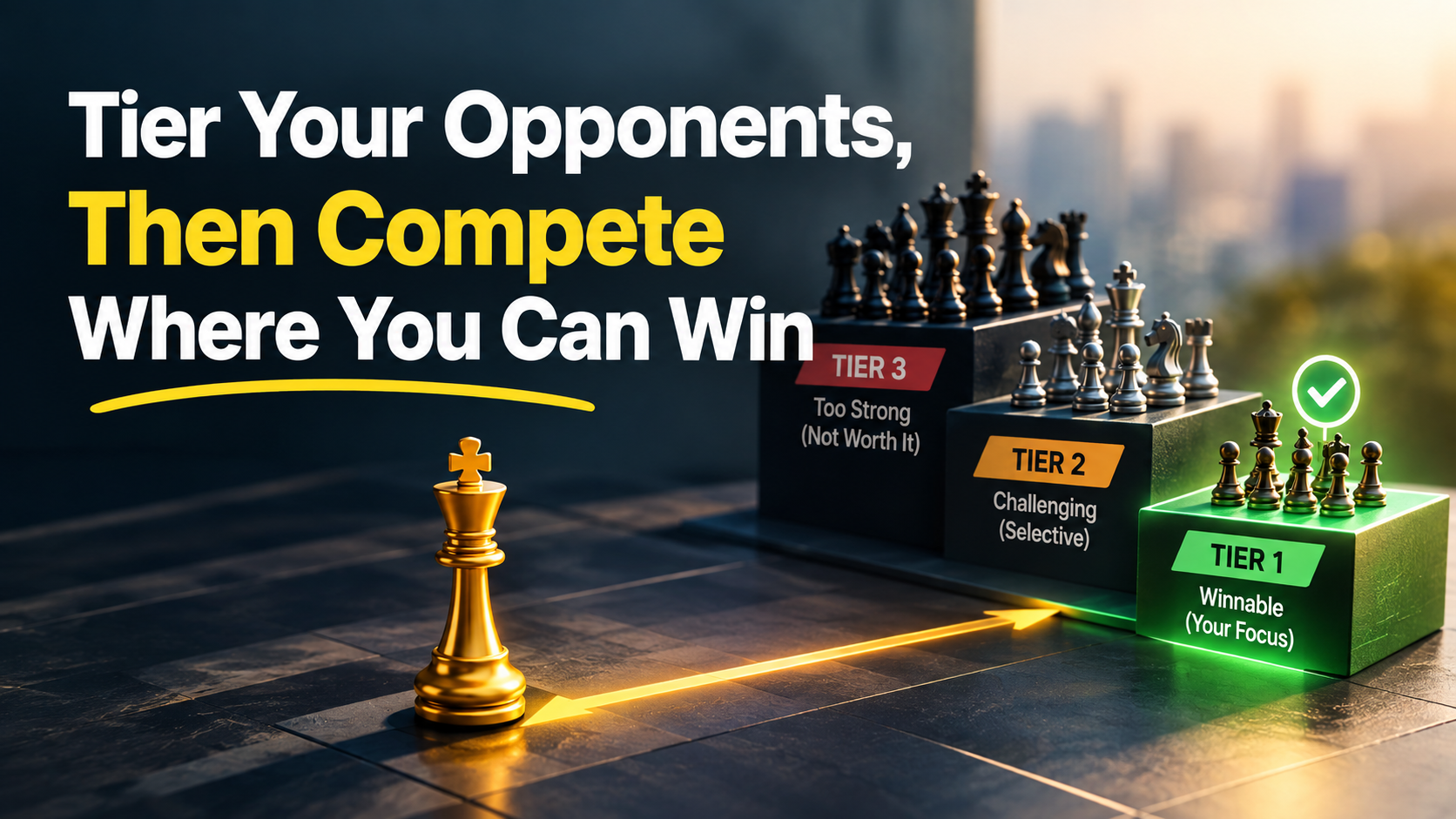
The Nations League splits European national teams into four leagues, A through D, and places teams by ranking. Group games then pit similar teams against each other. Smaller nations stop absorbing pointless defeats against giants, and stronger nations stop coasting through easy wins. Every match carries information because the sides are close in strength.
Apply the same segmentation to your market. Series A founders often chase every logo. A ten-person startup pitches a Fortune 500 procurement team in the same week it courts a 40-person startup that could sign in ten days. The enterprise deal drains your best engineers into security questionnaires. The small deal closes, teaches you something, and pays you before the quarter ends.
Tiering does not mean thinking small. It means matching your current strength to the right competition. Georgia’s national team, for example, played in the lower divisions of the Nations League and built results against comparable opponents. That record fed directly into their later success (more on that below).
Run the same exercise on your pipeline:
- Your League A accounts: large buyers with long cycles. Pursue one or two, with a dedicated owner.
- Your League B accounts: mid-market buyers who can decide in weeks. Make these your core.
- Your League C and D accounts: small teams that adopt fast. Use them for rapid product feedback.
Each tier gets its own playbook, pricing, and success metric. You stop measuring a mid-market sales cycle against an enterprise benchmark, and you stop feeling behind when a big deal takes six months.
Build Promotion and Relegation Into Your Operating Rhythm
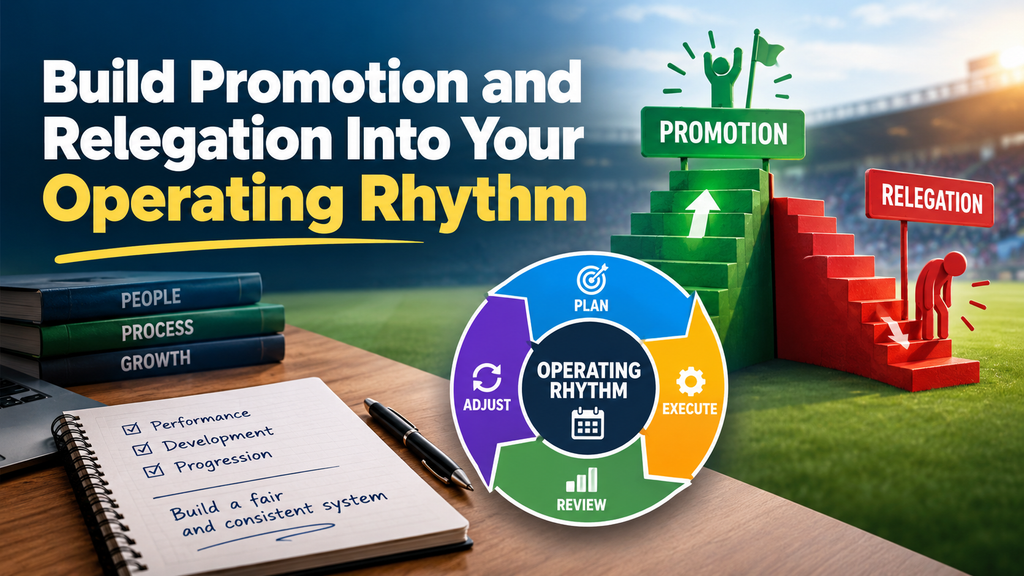
The Nations League runs on movement. Winning a group promotes a team to a higher league in the next cycle. Finishing last relegates it to a lower one. Nobody keeps a spot by reputation.
That rule forces honesty. A team can’t blame a bad draw for a bad result, because the format sends it down anyway. And a team that improves gets rewarded with tougher opponents and higher visibility.
Your startup has no such mechanism by default. Projects survive on founder attachment. Channels stay funded because they worked once. Engineers keep maintaining features that three customers use.
Install a quarterly promotion and relegation review. Rank every product bet, growth channel, and internal initiative on one shared metric, such as revenue influenced per engineering week. The top performer gets promoted: more headcount, more budget, and a seat in planning. The bottom performer gets relegated: a smaller budget and a shorter leash, or a shutdown.
Three rules keep this review credible:
- Publish the metric before the quarter starts, so nobody argues definitions afterward.
- Give relegated projects one clear path back, so the team sees a route to earning promotion.
- Let the data decide, not the loudest voice in the room.
Speed comes from this rhythm. Series A companies rarely die from one catastrophic mistake. They die from a slow pile-up of decisions nobody revisited. A quarterly cadence forces you to revisit them four times a year.
Give Every Team a Backdoor to the Big Stage

Here is the strongest argument for the Nations League, and the one founders should study most closely. It gives weaker teams a second route into the European Championship.
Teams that fail to qualify through the standard route can still earn playoff places through their Nations League results. Georgia used that path. The country had never reached a major tournament, but it won its playoff route, nations league beat Greece on penalties in March 2024, and qualified for Euro 2024. A team that the standard qualifying system would have left at home walked onto the sport’s biggest European stage.
Founders can build the same backdoor into their organizations. Your standard process is your roadmap, your quarterly plan, and your hiring pipeline. It works most of the time. But it also filters out unusual ideas, unproven engineers, and untested channels, because those don’t fit the plan.
Create a small, protected lane for them. Set aside a fixed slice of each sprint, say one engineer for six weeks, for bets that the roadmap would reject. Judge those bets by the same scoreboard as everything else. If a bet posts strong results, it earns a playoff: a real budget and a real shot at the main plan.
This approach costs little and captures asymmetric upside. Most experiments will fail, as most Nations League underdogs still miss out. But when one succeeds, you get a channel, a product line, or a hire that your standard process would never have surfaced.
Look at how the competition’s results reward this structure. Portugal won the inaugural edition in 2019. France won in 2021. Spain took the 2023 title on penalties against Croatia. Portugal won again in 2025, beating Spain on penalties in the final. Different champions have emerged because the format rewards current performance over history. A tournament that resets the board every cycle keeps talent moving up, and your company can do the same.
Start small. Pick the one recurring commitment that currently earns nothing, attach a metric and a deadline to it this week, and let the result decide what happens next. Teams that treat every fixture as one that counts will outrun teams that keep scheduling friendlies, and the Nations League shows exactly how.
Written By sumitmarketing.com