
You raised money to hit milestones in 18 to 24 months, and every channel competes for the same runway. Paid ads deliver fast, but they stop the moment your budget stops. Content marketing compounds, but it takes quarters to pay off. A local SEO agency sits between the two. It targets searches with buying intent in specific geographies, and it fixes the foundations that decide whether you appear at all.
Google’s own documentation says local rankings depend on three factors: relevance, distance, and prominence. You cannot change distance, but you can change the other two. A local SEO agency works on relevance and prominence every week, so your engineers can stay on the product. That split matters. Your best engineer costs far more per hour than an agency analyst, and she gains nothing from learning citation cleanup or review-response workflows.
Be honest about fit first. This approach works if customers search with a city name or “near me,” or if your growth depends on adding supply or demand city by city. Think multi-location services, clinics, field-service platforms, proptech, logistics hubs, and marketplaces that launch market by market. If your product sells globally with zero geographic intent, skip the local SEO agency and put the money elsewhere.
A specialist also moves faster than a generalist. A local SEO agency runs the same audit across many clients, so it recognizes failure patterns on sight. A founder who learns the discipline alone will spend weeks rediscovering what the agency already knows.
What a Local SEO Agency Ships in 90 Days
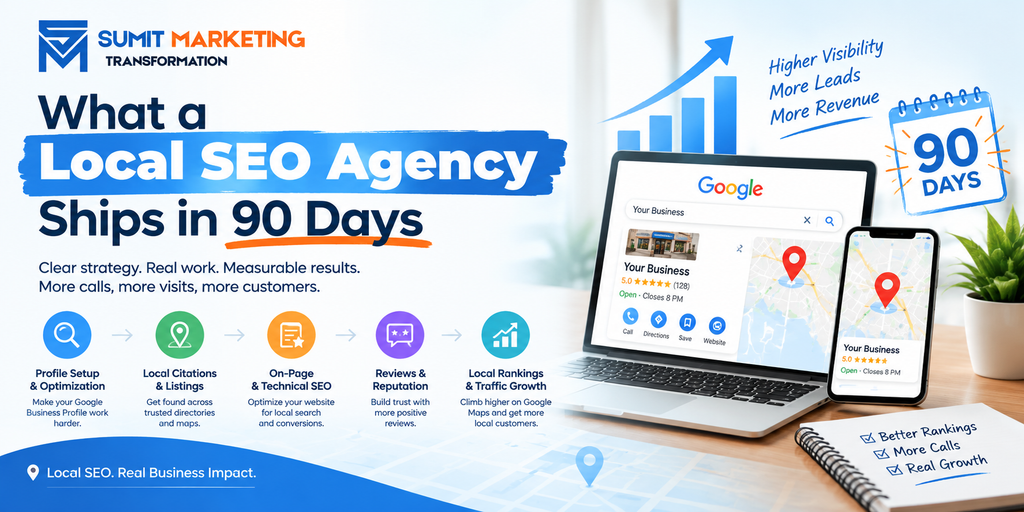
Technical founders distrust vague retainers, so demand a deliverables list. A competent local SEO agency should ship these items in the first quarter:
- Google Business Profile cleanup. The agency claims or verifies every location, picks accurate primary and secondary categories, writes service descriptions, and uploads real photos. Wrong categories sink more profiles than weak content does.
- NAP consistency. Name, address, and phone number must match exactly across your site, your profile, and the directories that matter in your industry. Mismatches confuse both customers and ranking systems.
- Location pages with structured data. Each market gets a page with unique content and LocalBusiness schema in JSON-LD. You can validate this yourself with Google’s Rich Results Test, so no one has to take the agency’s word for it.
- A review process. The agency builds a workflow that asks happy customers for reviews and routes replies to the right owner. It does not buy reviews, which violates Google’s policies and risks suspension.
- Measurement. Google Business Profile Performance reports show calls, direction requests, and website clicks. The agency should connect those to your CRM so you can trace a phone call to a closed deal.
Notice what this list omits. It promises no “page one in 30 days” and no mystery tactics. Each item produces an artifact you can inspect. If a local SEO agency cannot show you a before-and-after for each one, you are buying hope.
Sequence matters too. In the first month, the agency audits and fixes the profile and the data inconsistencies. In month two, it launches location pages and the review workflow. In month three, it reads the early data and doubles down on the locations that respond. You get a feedback loop measured in weeks, which suits a team that already ships in sprints.
The ROI Math, Using Your Own Numbers
Skip the industry statistics. Run the math with your own data, because your contract value and close rate decide everything.
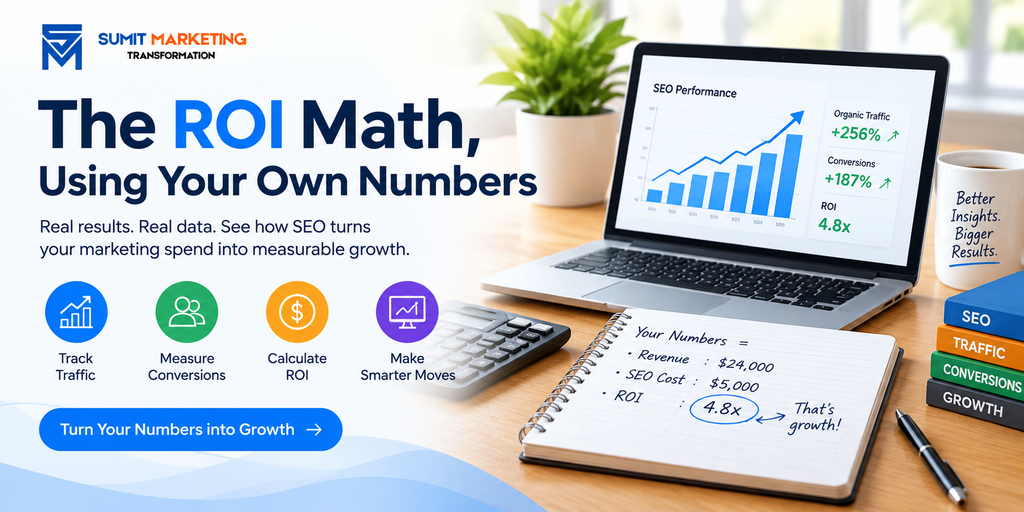
Here is an illustrative model, not a forecast. Suppose a local SEO agency charges $3,000 per month. Over a 90-day engagement, that costs $9,000. Suppose your average first-year contract value is $6,000. You break even at two new customers, because two customers return $12,000. If your sales team closes one in five qualified leads, you need roughly ten qualified leads across the quarter to land those two customers. Ten leads in 90 days from a handful of markets is a modest bar.
Now compare the cost structure. A paid click costs money every time, and the traffic disappears when the budget does. A verified, well-optimized Google Business Profile and a set of strong location pages keep working after the engagement ends, because they are assets you own. That difference matters to your investors. A founder who can show falling blended CAC while paid spend stays flat tells a stronger story at the Series B conversation than one who simply scales spend.
Also price the in-house alternative. A full-time local marketing hire costs a salary, benefits, software subscriptions, and two to three months of ramp time before output starts. A local SEO agency delivers from week one on a cancellable contract. At Series A, a variable cost you can stop beats a fixed cost you must carry.
Write your own version of this model before you sign anything. Put your contract value, your close rate, and the agency’s fee in a spreadsheet. If the break-even point sits above what your markets can plausibly deliver, walk away. A good local SEO agency will respect that discipline, and a bad one will dodge it.
How to Pick a Local SEO Agency Without Getting Burned
Treat the selection like a vendor security review: verify everything.
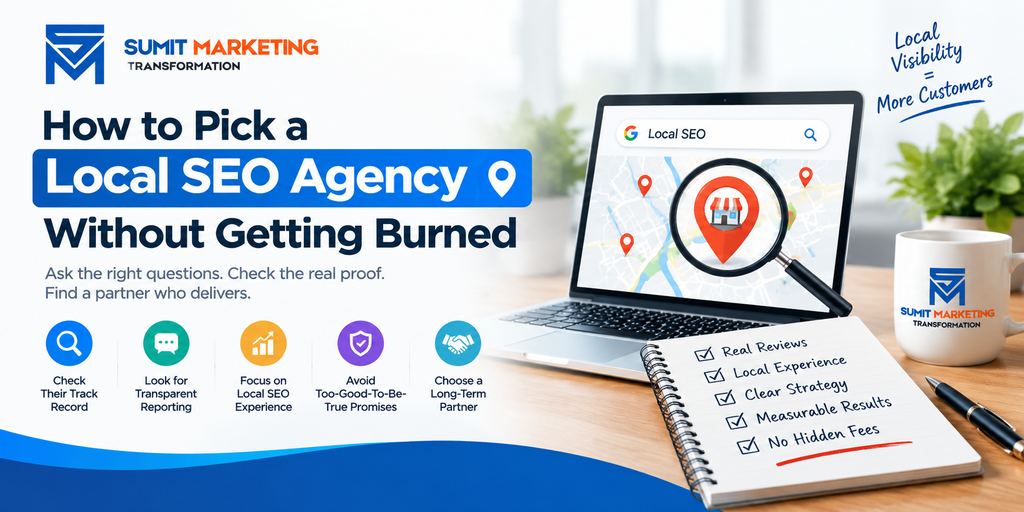
- Demand account ownership. Your Google Business Profile, analytics, and call-tracking accounts must live under your login. If the agency owns them, you lose the asset when you leave.
- Ask for client references and call them. Request a case with before-and-after Performance data, then phone that client. Ask what changed in calls and booked revenue, not rankings.
- Reject guarantees. No honest local SEO agency can promise a specific ranking, because Google controls the results. Guarantees signal either ignorance or spam tactics.
- Check their reporting. Insist on metrics tied to revenue: calls, direction requests, form fills, and closed deals. Impression counts alone prove nothing.
- Keep the contract short. Choose a three-month initial term with a clear exit, so you can judge results against your own break-even number.
- Test their technical depth. Ask how they implement LocalBusiness schema, how they handle multi-location pages without duplicate content, and how they track grid-level rankings. A vague answer tells you what you need to know.
Run a small pilot before committing broadly. Pick two markets, give the local SEO agency a 90-day brief with agreed metrics, and compare against two control markets where you change nothing. That test costs little, produces your own evidence, and settles the argument with data instead of opinions.
A local SEO agency earns its fee when you hold it to engineering standards: clear deliverables, owned assets, and numbers you can audit. Run the pilot, check the math, and let two markets decide whether the model scales.
Written By sumitmarketing.com