
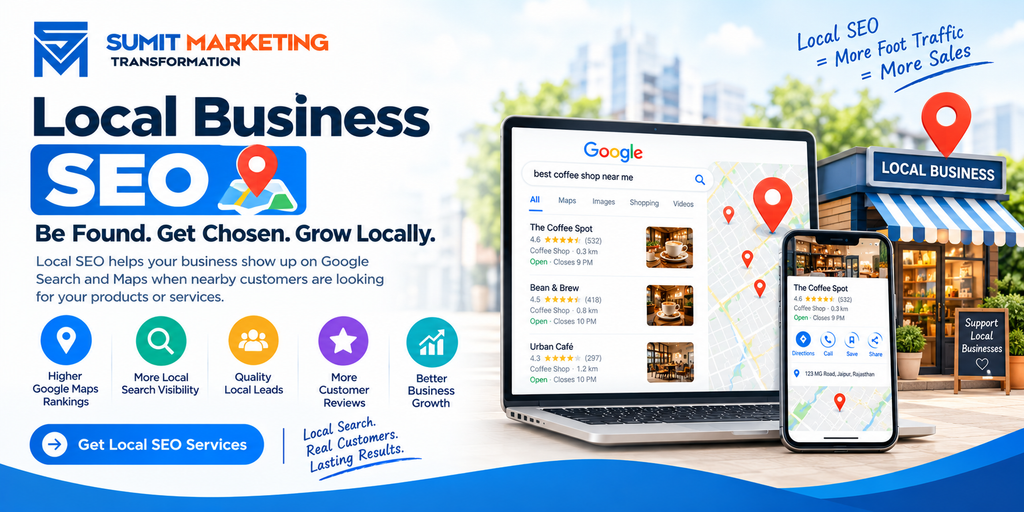
A person who types “emergency plumber near me” or “dentist open Saturday” has finished researching. Google answers with a map pack, a block of three listings above the organic results, and the searcher calls or taps for directions. Local business SEO competes for those three slots.
Thumbtack, Angi, and Zocdoc built large companies by capturing exactly this kind of local-intent query. You can capture it directly instead of paying a marketplace to broker it.
You need this channel if your startup does either of these:
- Sells to local businesses such as clinics, restaurants, salons, or home-service firms. Their owners search for software the same way their customers search for them, and local business SEO puts your product in front of both groups.
- Operates physical locations such as clinics, retail sites, labs, or field-service hubs. Each location is a separate ranking opportunity.
Paid search charges you for every click, every month. Local business SEO builds a ranking asset that keeps working after the initial effort, though it needs upkeep. Technical founders understand compounding assets, and rankings behave like one.
The measurement also suits an engineering mindset. Google Business Profile’s Performance report shows calls, direction requests, website clicks, and the search terms that triggered your listing. You do not need a tracking pixel to see which queries produce action. Pair that report with UTM tags on your profile’s website link, and you can attribute leads in your own analytics stack.
Google’s Ranking Inputs Reward Engineering Habits
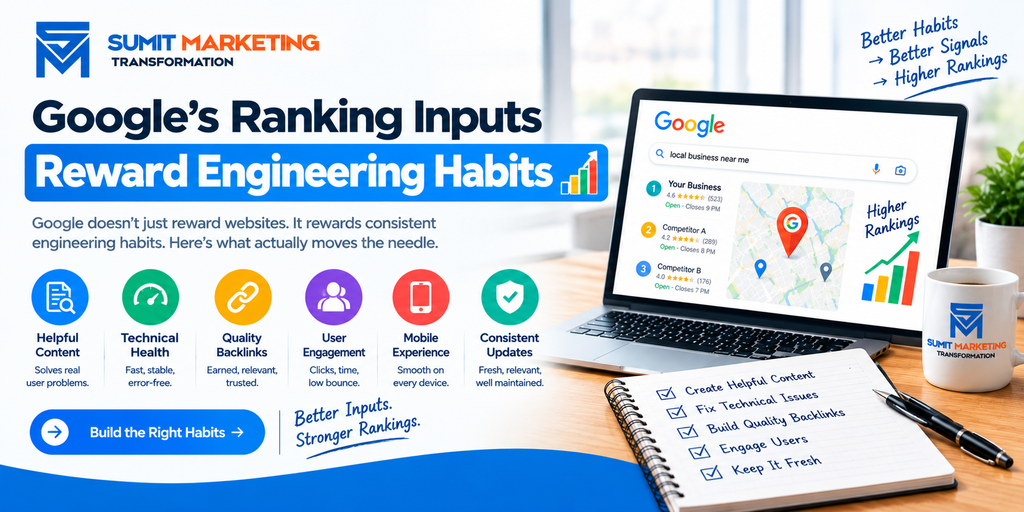
Google documents three factors for local results: relevance, distance, and prominence. Each one maps to work your team already knows how to do.
Relevance measures how well your listing matches the query. local business SEO, Choose your primary category with care, because it carries the most weight. List every service you offer inside the profile. Then build a dedicated page for each service and each location, with unique copy rather than a template with the city name swapped. Thin duplicate pages dilute your local business SEO instead of strengthening it.
Distance measures how far the searcher sits from your location. You cannot change the searcher’s position, but you can control what Google knows about yours. Verify the profile, enter the exact address, and mark the service area correctly if you travel to customers. Make sure your name, address, and phone number match across your site, your profile, and major directories. Inconsistent data confuses the system, and fixing it costs almost nothing.
Prominence measures how well known you are, local business SEO, and Google says it draws on reviews, links, and general web presence. Reviews matter most here, and you control the process. Send a review request automatically after every completed job or visit. Reply to every review, positive or negative, within a few days. Your replies show up in your listing and tell prospects you pay attention.
Your technical skills give you an edge on the rest of the stack:
- Add schema.org
LocalBusinessstructured data to each location page, with address, hours, phone, and geo-coordinates. - Keep page speed fast on mobile, since most local searches happen on phones.
- Keep your hours current, including holidays. Wrong hours generate bad reviews, and bad reviews erode your local business SEO.
Most local competitors skip structured data and run slow, template-built sites. That gap is your opening.
Run the ROI Math Before You Hire an Agency
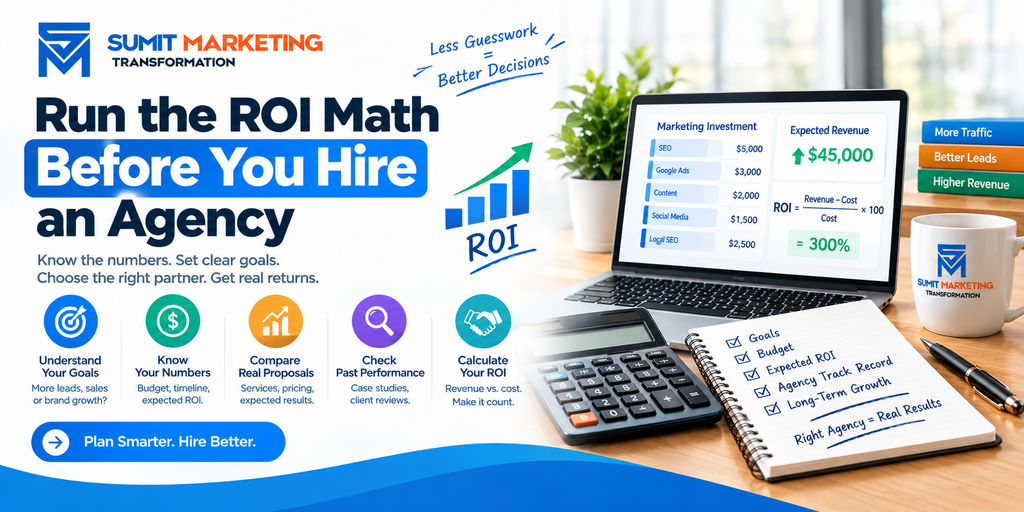
Founders at Series A answer to a board, so build the model before you commit budget. The formula is short:
Monthly local leads = (monthly local searches × map-pack click-through rate × conversion rate)
Pull search volume for your service and city terms from Google Keyword Planner. local business SEO, Take your click-through rate and conversion rate from your own Business Profile and site data, not from industry averages. Averages mislead because your category, price point, and geography differ from everyone else’s.
Here is an illustrative calculation. The numbers are assumptions for demonstration only, so replace them with your own data:
- Assume 4,000 monthly searches across your service-plus-city terms.
- Assume you capture 5% of them as profile actions, which gives 200 actions.
- Assume 20% of those become booked customers, which gives 40 customers.
- Assume each customer is worth $1,500 in first-year revenue, which gives $60,000.
Now compare that to your acquisition cost on paid channels. If your assumptions hold, local business SEO costs mainly labor and a review-request tool, so the payback period shrinks compared with paid clicks you rebuy every month. If your assumptions fail, you find out in 60 days instead of two quarters.
Track four numbers every week: profile impressions, profile actions, review count, and booked customers by source. Those four tell you whether the channel works, and they show you which lever to pull when it stalls.
Do not hand the whole thing to an agency on day one. Run the first 30 days in-house so you learn what drives results. Then you can judge agency proposals against your own baseline and spot padded retainers.
Ship Local Business SEO in 30 Days
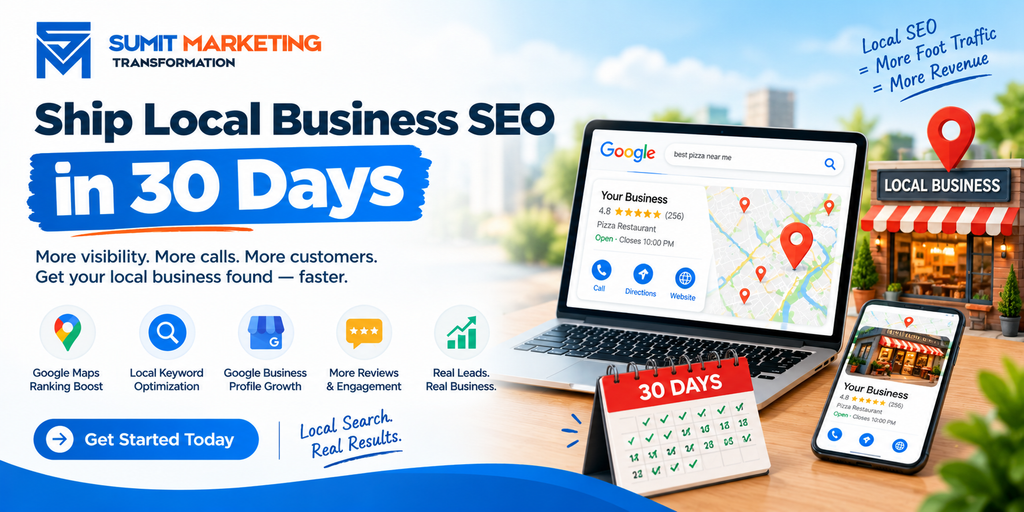
Treat this like a sprint, because the first month produces most of the structural wins.
Week 1: Audit and fix the foundation.
- Claim and verify every location’s Business Profile.
- Standardize your name, address, and phone number everywhere you appear.
- Choose primary and secondary categories, and fill in every attribute and service field.
Week 2: Build the pages.
- Publish one page per location and one per core service.
- Add
LocalBusinessschema to each page. - Embed a map, list real hours, and add photos your team took, not stock images.
Week 3: Start the review engine.
- Connect review requests to your CRM or booking system so they fire automatically after each completed transaction.
- Respond to every existing review.
- Post updates and photos to your profile weekly.
Week 4: Measure and adjust.
- Read the Performance report and note which queries trigger your listing.
- Compare your rankings against the top three competitors in your map pack for your five most valuable queries.
- Close the biggest gap first, whether that is category choice, review volume, or a missing service page.
After the first month, move to a steady cadence. Request reviews continuously, publish location-specific content when you have something real to say, and audit your listings every quarter. Local business SEO rewards consistency more than bursts of effort.
One warning: never buy reviews or fake locations. Google suspends profiles for those violations, and a suspended listing stops sending you customers until it is reinstated. Earn the ranking the slow way, or lose it quickly.
Your competitors in the map pack probably haven’t touched their structured data, review process, or page speed. Fix those three things this month, and local business SEO will start paying you back while they keep guessing.
Written By sumitmarketing.com