
Series A pressure follows a pattern. The board wants faster growth, burn climbs, and paid ads look like the quickest lever. Ads deliver traffic by the day, and when you cut the budget, the traffic stops the next morning.
Search engine optimization services work on a different mechanic. A page that ranks for a high-intent query keeps sending visitors after your team ships it, and every new page builds on the ones before it. Technical founders will recognize the tradeoff. Paid spend behaves like compute you rent per request. Organic rankings behave like infrastructure you build once and amortize. You still maintain it, but the cost per visitor falls as the asset ages. That curve matters when you plan an 18-to-24-month runway to Series B.
Search also catches buyers at the moment they describe their problem. Someone who types “SOC 2 automation for startups” or “Postgres connection pooling” into Google is not browsing. That person is shopping for a fix. Good search engine optimization services put your product in front of that buyer at the moment of intent, without interrupting anyone’s day.
Compare that with outbound or social channels, where you pay to start conversations nobody asked for. Search skips the interruption. The buyer arrives with the question, and your page supplies the answer.
The ROI math founders can check themselves

Run the numbers with your own data instead of trusting a pitch. The model below uses illustrative assumptions, not industry benchmarks, so swap in your own figures.
Assume your blended paid customer acquisition cost is $1,200 for a product with a $10,000 annual contract value. Assume you invest $8,000 per month in search engine optimization services during year one, which totals $96,000. Assume the program produces 40 organic customers that year. Year-one cost per customer lands at $2,400, double your paid cost. This is why many founders quit early.
Now look at year two. Assume you drop to a $3,000 monthly maintenance budget, which totals $36,000, and the pages from year one keep ranking and converting. Assume they bring 80 customers. Year-two cost per customer falls to $450. Across both years, you spend $132,000 for 120 customers, an average of $1,100 each. Buying those same 120 customers through paid channels at a flat $1,200 costs $144,000.
Two lessons come out of this model. First, search engine optimization services lose to paid in the short run, so a founder who needs customers this quarter should keep paid running. Second, the program wins when the assets keep producing after the heavy spend ends. Paid CAC also tends to rise as you saturate an audience, so a flat $1,200 flatters paid.
Treat this model as a contract template. Ask any vendor of search engine optimization services to build one with your numbers, name the assumptions it depends on, and commit to the metrics that would prove it wrong. A vendor who refuses to do that is selling theory, and you have no time for theory.
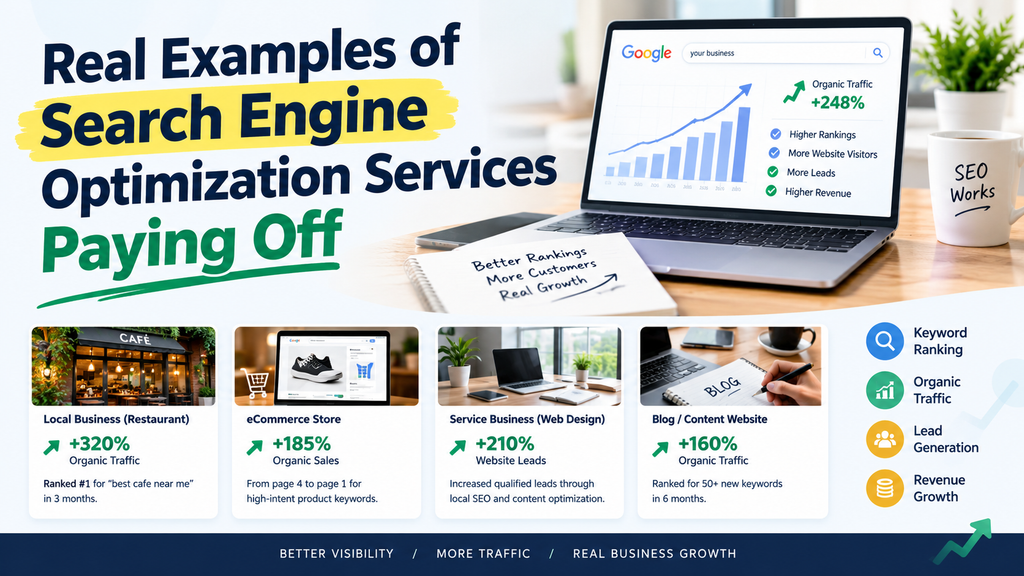
Real examples of search engine optimization services paying off
Zapier shows the clearest pattern. The company built landing pages around the exact pairs of apps people search for, such as connecting one tool to another. Each page answers a specific query, solves a specific problem, and leads straight into the product. Zapier treated search as a product surface, and engineers, designers, and marketers worked on it together.
Ahrefs shows a second pattern. The company sells SEO software and publishes detailed guides on the problems that software solves. Its guides sit near the top of results for many SEO queries, and that placement works as a live demonstration of its own product. Readers who learn a tactic from the blog walk straight into a tool that automates it.
Both companies share three habits that you can copy:
- They target queries that signal a buyer with a problem, not vanity terms with huge volume and no intent.
- They tie every page to a product action, so a visit has a clear next step.
- They keep publishing and updating, which lets older pages keep their rankings while new pages widen the base.
The habits matter more than the logos. You do not need Zapier’s scale to use the same approach. You need a list of the questions your best customers asked before they bought, and a plan to answer each one better than anyone else on the results page.
Technical founders hold an advantage here. You understand your product’s real use cases, edge cases, and failure modes better than any agency writer will. Feed that knowledge into your search engine optimization services engagement, and the content gets sharper, more accurate, and harder for competitors to copy.
How to buy search engine optimization services without burning a quarter
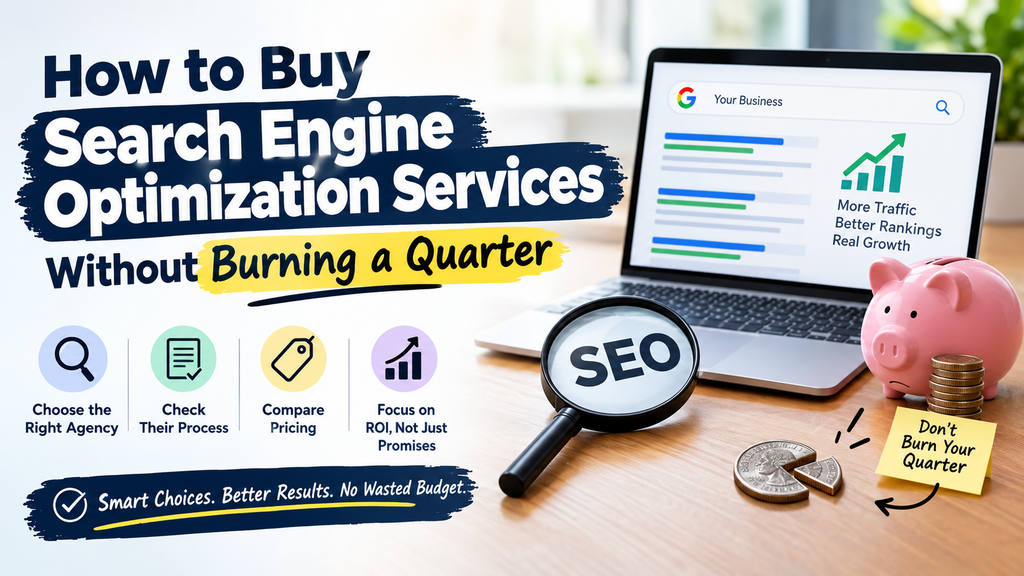
Most bad outcomes come from bad scoping, not bad luck. Use these rules to protect your budget.
Start with a technical audit. Modern stacks create their own problems. Client-side rendering can hide content from crawlers, slow pages can hurt rankings and conversions, and messy URL structures can split your authority across duplicates. Fix indexation and rendering before you commission a single article, because great content on a page Google cannot crawl earns nothing. Your engineers should review the audit findings and own the fixes, since the vendor usually cannot ship code in your repository.
Scope around purchase intent. Ask the vendor to list the 20 queries most likely to bring a buyer, with the reasoning behind each. If the list centers on broad, high-volume terms, push back.
Measure pipeline, not rankings. Rankings tell you the vendor is busy. Demos booked, trials started, and revenue attributed to organic search tell you the program works. Demand access to Google Search Console and your analytics from day one, and review them yourself every month.
Set 90-day milestones. Search takes months to compound, so plan in quarters, not weeks. search engine optimization services, Within the first quarter, you should still see concrete output: audit fixes shipped, a prioritized query map, and the first pages live and indexed. If a vendor cannot show shipped work by day 90, replace the vendor.
Walk away from guarantees. Google’s own documentation warns that no one can guarantee a top ranking. Any provider of search engine optimization services who promises page-one results by a fixed date is either guessing or planning to cut corners that can trigger penalties.
Finally, decide who owns the program internally. Search engine optimization services work best when one person on your team holds the goal, reviews the numbers, and unblocks the vendor. Without an owner, even a strong agency drifts.
Paid ads rent you traffic, but search engine optimization services give you a channel you own. Build the model, scope it tightly, and start before your competitors take the queries your buyers already type.
Written By sumitmarketing.com